Showing posts with label vtmb. Show all posts

Sunday, January 30, 2022

SONY

After conquering the massive and delicious beast that was Wrath Of The Righteous, I turned my sights to a significantly smaller quarry: Vampire: The Masquerade: Shadows of New York. This is a sequel to Coteries of New York, which I played last year and enjoyed.


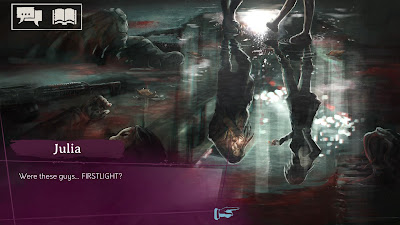
Visually, the two games are very similar, with a classic visual novel style. Almost all of the characters are vampires, and thus have a significant gothy vibe. The settings are cool: all the locations are in New York City, but instead of the major tourist locations we mostly stick to run-down industrial districts, overgrown community parks or quiet residential streets. The visuals in Shadows are stylistically similar but more impressive, particularly with subtle animations and lighting. Characters are static but seem to "breathe" with faint fluctuations. You'll sometimes see a pedestrian jogging by in the background, or a flickering police siren, or the flash of lightning over the Brooklyn Bridge. These add a lot of life to the atmosphere.


MINI SPOILERS

Gamewise, though, Shadows is pretty different from Coteries. Shadows is a very straight visual novel. You can occasionally choose which of two or three locations you will visit on a given night; these locations can sometimes provide a bit of background lore or insight, but they're mostly just flavor. You are playing as a predefined character, Julia, who speaks almost all of her lines unprompted. Occasionally you can choose between one of three dialogue responses. These have a minor impact on NPC's opinions of you and can influence their future dialogue. At five points during the game, you need to choose between two options. Sometimes this is a course of action, but more often it's just deciding how you feel about something. These five choices collectively determine which of two endings you will receive for the game.


Overall, it's much less game-y than Coteries was. You can't choose between different player characters, you always have access to the same Powers, you don't need to worry at all about your Hunger level, feeding is just a stylistic choice, using your Powers doesn't have any consequences, your side-missions are all standalone vignettes instead of an evolving plot, NPCs don't really track their opinion of you.


MEGA SPOILERS

The irony is, though, that Coteries has a lot of game systems that don't actually mean anything in the end: it doesn't matter what you do, the story always ends in the same way. Shadows has almost no game systems, but it does allow you to influence the outcome, albeit in an oblique way.


Somewhat amusingly, the Steam achievements for the two endings are labeled "Good Ending" and "Bad Ending", although they arguably should be reversed. The "Bad" ending is the one where you hold on to what remains of your humanity, make up with your girlfriend, and strike out west for a life of freedom. The "Good" ending sees you mercilessly pursue power and achieve your putative goal at great cost.


So, which is better, Shadows or Coteries? I enjoyed Coteries more while playing it, but after finishing both I think I give the edge to Shadows. I'm a huge sucker for player agency, and having at least the possibility of a lighter ending made the whole experience feel fun.

As for the actual plot: It was pretty enjoyable. There are a lot of callbacks to Coteries, which I mostly enjoyed, though if I hadn't played the game somewhat recently much of it may have gone over my head. The plot felt both more sprawling and more focused than in Coteries. Sprawling in that all of the side-quests were pure flavor and didn't tie in to the main plot at all, unlike Coteries where the side-quests determined who was in your coterie and would accompany you at the end. But it's more focused in that you learn relatively on what the main point of the game is ("Find out who killed Boss Callihan and why"), unlike Coteries which felt like "You're a vampire, now go do vampire things and see what happens."


The tone of the game felt very different from any other V:TM game I've played. Apparently this is due to the protagonist being a member of the Lasombra clan, which I haven't encountered; that, in turn, seems to be due to some recent meta-plot development, which have moved the Lasombra out of the Sabat and into the Camarilla fold. Anyways, it was a little startling to learn that the PC has a mortal girlfriend (not a ghoul!) who knows that the PC is a vampire and is cool with it. But, it's explained well in-game as being due to the Clan's hatred of slavery. In general, Julia seems to be much more in touch with her previous mortal life than other V:TM characters, and she regularly bumps into old friends and colleagues without it being a big deal.


I don't generally prefer predefined characters in games, but Julia had a great voice and was a lot of fun. She's cynical and sarcastic, but her cynicism is fueled by a strong sense of justice and a belief that the world could be better than it is. She's also bright and well-read, with references ranging from Bulgakov to meme culture. While still a gloomy game, there's a lot of good humor sprinkled throughout, thanks mostly to Julia's perspective on events.

END SPOILERS

I'm not a big expert on White Wolf lore, but am learning more all the time. About 99% of my information comes from video games, and 1% from going down wiki rabbit holes while looking up stuff from the video games.


As I've mentioned before, I do really appreciate how Paradox is handling the World Of Darkness property. It's a bummer that V:TM:B2 has been canceled, but that hasn't held up the trickle of lower-price-point games like these. It all helps with the worldbuilding and keeping the scene vibrant. I really appreciate games like these as palette cleansers between the often daunting RPGs that I can't seem to stop playing.

Tuesday, June 08, 2021

The Big Apple

I have a short update on a very long game, and a long update on a very short game, both published by Paradox Interactive!

 I've abandoned my Feverian run of Stellaris, thanks entirely to my own stupidity. The game had been going great: my "be nice or we'll beat you up" hegemony had absorbed every single empire in the galaxy shortly after 2300, and my empire was already researching future techs. I'd vassalized and absorbed a few other empires, was the sole Council member in the Galactic Community, terraformed all my planets into Gaia worlds. And then, like an idiot, I rivaled the Fallen Empires.

I think I was remembering my previous Pacifist game, where it was surprisingly hard to get the FEs to attack me, so I wanted to start preparing the groundwork early. And I was just starting to build Gateways, so Influence was in shorter supply than ever. But of course you can't choose when the FEs will attack you. Oddly enough, it wasn't the Fanatic Xenophobes, but rather the Fanatic Materialists who came after me. Their Fleet Power was maybe 25% or so higher than mine, and at first they did the trademark brain-dead FE thing and flew away in the exact opposite direction. But once I started attacking their bases they quickly returned and annihilated me, including my brand-new Juggernaut. Alas.

It would be interesting to keep it going and try to recover, but I decided to call it a game and try something else out. During a recent Steam sale during Paradox's annual convention, they offered big discounts across their entire catalog. I picked up a handful of other Stellaris DLCs I wanted, like Distant Stars and Ancient Relics; and I also grabbed Vampire: The Masquerade: Coteries of New York, which is by another studio called Draw Distance but published by Paradox.

It was pretty big news a couple of years ago when Paradox acquired rights to the World of Darkness, which have languished since the demise of Troika. The big reveal was the proper sequel to Bloodlines, which I have been excited for and then alarmed about. But in addition to that big-budget game, Paradox has also been partnering with a surprisingly wide range of developers for lower-budget indie-esque takes on the property. I don't remember seeing an approach like that before; the closest analogue is probably Lucasfilm, making a bunch of Star Wars-themed games across a wide variety of genres and game types.

Coteries of New York was one of the (or perhaps the?) first games to come out under the new arrangement. At first blush, it looks a lot like a visual novel. It's very text-heavy, with no recorded dialogue. The vast majority of scenes show a single character standing in front of a background scene, delivering dialogue, and eventually culminating in a three-choice response from you.


That said, the production values are a lot higher than you'd expect from a Ren'Py-type visual novel. The backgrounds in particular are fantastic. When looking at a map of New York City, the arterial streets pulse with blood. Flickering fluorescent lights battle against downpouring rain to illuminate a darkened storefront. Dancers jump and writhe in the background of a club.


The visual design is also fantastic. The character designs are a real highlight, with the vampires looking brooding and magnetic. The city itself is wonderfully gritty; you're often just around the corner from some famous tourist spot, scraping up against the real hard edges of the city, with potholed streets and rusty drainpipes and overgrown bushes.


The overall writing and dialogue are really good. There are a handful of minor typos, and a couple of places where it seems like some lines are just skipped: you have to press "Continue" twice to advance, and then see a response without any prompt. But with so much text these minor hiccups don't really stand out. Each character has a nicely distinctive voice, recognizable motivations and personality. Almost all of the action in the game is communicated through text instead of visuals, and they do a great job at making you viscerally feel the punches and gunshots and metallic taste of blood thanks to the evocative writing.

Music is great in the game, with a mix of ambient tunes and background sound, but there are some inexplicable silent stretches in the game that made me miss it.

And the gameplay? Well, the introduction is a pure straight-up visual novel. There are lots of branching paths choose-your-own-adventure-style, but no real mechanics. Once you move into the main game, there's a bit more gameplay, but it's very light. The game really just has one mechanic, Hunger. Your Hunger increases slowly over time, and more rapidly if you take physical damage or use vampiric abilities like Presence or Fortitude. Hunger decreases when you feed on humans. I never saw what happens when Hunger gets too high, but presumably it's Very Bad.


From what I can tell, you should pretty much always Feed whenever the game gives you the opportunity to do so; these chances just come up at predefined points during specific stories, so you can't seek them out when Hunger gets high. There are a few symbols that appear on Hunger-related options, and sometimes they are unavailable, which I think might mean you have too much or too little hunger? The symbols were honestly a bit annoying, they only tell you what they mean once and you can't look it up again later, either in-game or anywhere online.


In practice, most Hunger-related situations feel like a wash. Using a vampiric power will increase Hunger while letting you avoid damage; not using the power will deal you damage and thus increase Hunger. If you Feed early in a mission, you'll probably face an encounter later that increases Hunger again. Not always, though! The game does generally make sense, and based on what you know about situations and characters, you might be able to navigate through a scenario without ever using a Power or getting injured.

All of this power and hunger and blood stuff lines up very well with my previous experiences in Vampire: The Masquerade: Bloodlines, and presumably with the original White Wolf pen-and-paper game. Overall the game feels very lore-friendly. Stuff is explained well in-game and aligns with the overall mythology and mood of V:TM.

While hunger is the one mechanic, you do have a good amount of control over what your character does, mostly driven by mission selection. In the main part of the game, you can choose what to do each night. Most nights you can do two things, some nights only one. Usually a given subplot will have a slight pause between acts, forcing you to spread your attentions a bit instead of just following one line until its conclusion.

Unlike, say, the Shadowrun video games, you will only be able to do a limited number of sidequests during the course of the game. There are a limited number of nights, and the main plot automatically progresses on specific nights regardless of your actions. I think you're best off going "deep", picking a couple of specific stories and following them through to completion, rather than going "wide", starting a bunch of different stories. Which specific stories you follow don't seem to matter much, but at least one should probably involve recruiting coterie members.

MINI SPOILERS

Coteries of New York is good on the "choice" front, but not so good on the "consequences" side. For example, you can pick one of three characters to play as; but based on what I've seen after 1.5 playthroughs, the main part of the game is the game for all of them, with some relatively minor flavor text differences. You seem to have a lot of choices in how you progress through the introduction, but either you get railroaded into the same main plot or the game ends early. I was curious if your actions during that phase could cause you to become aligned with another faction, but it doesn't look like you can.


People do pay attention to how you treat them. For coterie members, that seems to affect whether they agree to join you or not. For other characters it affects their dialogue. Different people like different things and require particular approaches: for some people, you have to be really direct and project a tough image, while for others you have to be deferential and polite.


So, the game does track your words and actions, but that's the only thing it tracks. There aren't any items to collect or gear to upgrade or powers to learn or anything. It's all about relationships.

MEGA SPOILERS

This seems like a prime example of a "buy it on sale" game. I feel kind of bad writing that, since I always say that I want shorter games, and at about five hours for a playthrough this is actually a pretty awesome length for me. But the actual ending, while very appropriate to the lore and mood of Vampire The Masquerade, feels unsatisfying.


I was reminded in some ways of the Shadowrun games. In both universes, you are only a tiny insignificant pawn of far greater forces: the megacorps and the dragons of Shadowrun, or the ancient senior vampires and centuries-old traditions and societies of V:TM. I feel like the Shadowrun CRPGs do a good job at honoring this setting by emphasizing the impact you can make on a small slice of the world, even if you can't hope to change the status quo. In CoNY, you are left feeling like you had no agency or purpose at all, which is a much more deflating feeling for a player. (Though, granted, very much in line with my understanding of the tone of V:TM.)

END SPOILERS

As noted above, this game is on the short side and might be something to wishlist rather than purchase; I was really happy with it at $8, but I might have been more bummed at $20. If you really like vampires, though, this game delivers them in spades.


It's available on Steam for all computers, and on consoles, including the Switch. I actually feel like this would be an excellent game for mobile play: it's divided into nice short storytelling chunks, is text-heavy, and doesn't have any time-sensitive action gameplay. It would be great for commutes and plane flights now that we're doing those again. It's interesting to me that it isn't available for tablets or phones, since it isn't extremely technically advanced and seems like a great match for those devices.

While I didn't love this game, I did thoroughly enjoy it, and will be checking out the sequel once it's on sale too. Paradox has been publishing a bunch of World Of Darkness games, some of which seem to be even more text-heavy than this one. This seems to be a sensible direction for TTRPG adaptations, to try out a bunch of different projects with different partners aimed at different markets, rather than putting all of your eggs in one basket and hoping that a decade-long effort bears fruit.

In many ways, the visual novel (or text adventure!) adaptations seem to be closer to the experience of playing a pen-and-paper roleplaying game with a GM than a graphically-intensive first-person open-world game would be. It's all about imagination, and words can be incredibly evocative if we let them be.

Monday, March 25, 2019

Legal Tender

I joined the crowd of RPG fans elated at the recent announcement in San Francisco about a new Vampire: The Masquerade game. I'd been loosely following the rumors swirling over the last couple of weeks, mostly driven by the ARG Tender app, and was curious about what was in store, but honestly was not expecting a proper sequel to Bloodlines. Very few games have made a sequel after 15+ years of silence. It's really thrilling to see this is actually happening: Bloodlines has been an underdog cult classic for so long, but continues to see good traction on the Steam and GoG charts, and has a vibrant and active modding community, so I think the corporate suits with money noticed that there's a legitimate opportunity here and funded it. And it surely doesn't hurt that the game is so beloved by so many.

I'm allowing myself be be somewhat optimistic... not exactly preorder-optimistic (though it is already up on the Steam storefront), but the early news seems very encouraging. Paradox has a terrific reputation: I've only played Europa Universalis, but I know Stellaris has been getting rave reviews, and Paradox has a great track record for supporting their games long into their lifespan. What's really selling me on Bloodlines 2 at the moment is the writing staff. Brian Mitsoda, the original lead writer, is back, which by itself would be hugely encouraging. He's joined by Cara Ellison, a smart and thoughtful critic and writer who most recently helped deliver Dishonored 2. And rounding out the trio is Chris Avellone, an RPG writing hall-of-famer.


I'm not super impressed by the one trailer we've seen so far; it's almost entirely combat-focused, and you'd be hard-pressed to find anyone who thinks fondly of the combat from VtMB1. But there's certainly room to improve the combat, so maybe that was the purpose; and action-heavy trailers definitely show better than long and nuanced dialogue trees. I am a little apprehensive that VtMB2 will be to VtMB1 as the new Deus Ex games are to the original: streamlined action/RPGs that honor the setting and tone but lose the vast, wide-open "anything goes" design that allows immense flexibility in solving problems, instead following a more slick and cinematic sneak-and-shoot approach.

We have about a year until the game comes out, and I'm confident we will learn a lot more about it by then!

The timing of the announcement is fortuitous in a couple of ways. A couple of weeks ago I downloaded and installed (but hadn't actually started playing) the Clan Quest Mod, a well-regarded fan-made expansion to the base game. My original (and so far only) playthrough was with the Unofficial Patch, and I'd initially been planning on doing a modded run with the Unofficial Patch Plus, but the CQM recently came out with a major new release and I wanted to check it out. It adds new quests for each of the seven clans, and the latest version also adds a new hub area, new voiced NPCs, the option to leave the Camarilla and join the Sabbat, and contains several new endings. It also functions as a mod-manager, pulling in an assortment of features from various other mods: most (not all) of the Patch Plus content, new weapons from the Arsenal Mod, gameplay changes from the Camarilla mod, thrall followers from the Companion Mod, and a few other odds and ends.


I finally fired it up after watching the trailer and getting all inspired. There are already some major differences from the character creation process: in addition to choosing a clan, you can also select a colorful background for your character, like Burnout, Dropped On Head As A Baby, Runaway, Completely Batshit, etc. These obviously impact your perception of your character, and also have mechanical impacts: for example, a Burnout is a mellow stoner who is more likely to resist Frenzy, but also has a -1 penalty to Wits. Completely Batshit is a unique background for Malkavians that gives makes their Dementation ability more potent, at the cost of more expensive Obfuscation powers.


I initially skipped the tutorial, then went back and did it anyways since it's been a while and I wanted to reacquaint myself with the controls. I've noticed a little bit of wonkiness so far: one door didn't want to open at first, and I occasionally have trouble where the third-person camera is perpendicular to my character's movement. Those have easily been fixed by exiting and restarting. I'll keep an eye open on those things going forward; mods can definitely make games less stable, but Bloodlines was a notoriously unstable game to begin with, so it's always difficult to establish the ultimate source of an error.

The other cool little bit of synchronicity was that my new LP from Chiasm arrived in the mail on the same day as the trailer. I first discovered Chiasm from her amazing track "Isolated," which plays inside the club The Asylum in the first game. Since then I've gone on to devour all of her other albums, and have really enjoyed hearing how her sound has evolved and grown over the years.

Her new album is Reset, re-establishing a naming theme from the predecessors Reform and Relapse. It's great! Several tracks on it have appeared an earlier LP, like "Mice on a Wheel," "World Left," and "Make Believe." "Make Believe" in particular was such a joy to hear for the first time, delightful and surprising. After several listens, I think my new favorite is "Locked In," a beautiful track that ambles through the depths before soaring into the sky. Given how many original contributors to VtMB are coming back for the sequel, I think it would be awesome to have one of Chiasm's newer tracks included in the new game as well. "Ella" or "Stumble" would work particularly well with the game's heavy industrial soundtrack.

 
And that gets me daydreaming about what a licensed VtMB soundtrack might look like in 2020. The Birthday Massacre seems like an obvious choice to get some great goth in there. Ayria would be a ton of fun, almost any of her tracks would work great for a new club; "Feed Her To The Wolves" and "Hunger" would be great thematic matches, while "Friends And Enemies" is particularly danceable even for Ayria. I:Scintilla would be an awesome addition, especially one of their heavier tracks like Melt. And of course hearing more from Lacuna Coil and other OG artists would be awesome.

So, yeah... lots of excitement over here, and I'm keeping my fingers tightly crossed that I'll be playing a fun game a year from now!

Thursday, October 06, 2016

Werewolf: The Rave: Wineboxes

I need to slightly amend my earlier ebullient praise of Vampire: The Masquerade: Bloodlines. As Naomi had warned, it dips a little in quality in the second half of the game. The most distinctive features I had loved in my early experience (open-ended environments, many solutions to problems) are diminished or eliminated, replaced with a more typical level-based structure that requires you to travel from point A to point B, dealing with any hostile enemies along the way, and then defeat a boss.


It’s still good. Even when the design is less creative, the atmosphere is still amazing, and the game continues to collect dividends from its early investment in character development. I’d still recommend it, just with more caveats.

Some additional technical notes:

I’d forgotten to comment on this before, but one unusual and occasionally annoying aspect of the game is its frequent shifts between third-person and first-person view. I always preferred playing the game in third-person, but it automatically switches you back to first-person at many common points, such as after picking a lock. Fortunately, you can easily toggle the view yourself by pressing the Z key, and after the first couple of hours that was so ingrained into me that I ceased noticing that I was doing it.


It’s kind of amusing that there’s a common key for switching camera modes, and I almost love that as much as I love the fact that there’s a common key for “feast on the blood of your enemies”. Pressing F will attempt to Feed on whatever living creature is in front of you. For much of the game, I hardly ever used this: I generally initiated feeding through dialogues with “willing” human subjects, and less often from unsuspecting strangers in dark alleyways; when I needed to top up during a long-running mission, I used blood packs from my inventory. Later in the game, though, when the levels get harder and longer, I finally discovered the advantage of feeding on enemies. The most obvious advantage is a significant boost in your blood supply, and also a quick and sizeable recharge of your health. A further advantage, though, is that it’s completely silent: even if you feed on one enemy while right next to a second one, the other won’t notice its comrade fall. It’s also a great equalizer, as feeding can kill any non-boss enemy, regardless of its health or power. Feeding tends to be effective, so long as you start from stealth: if an enemy is not alert, you’ll often succeed on your first attempt. The capper, though, might be that failing to feed does not break stealth: you can keep trying until you manage to latch on.


I alluded to this in my previous post, but sneaking is incredibly effective. Even with a mere 2 points in the ability (1 each from Dexterity and Stealth), you are effectively invisible to most enemies in the game. Depending on the level design, I would sometimes bypass them, sometimes perform one-hit stealth kills, and sometimes feed on them. I invested in melee skills because of how much I enjoyed this up-close-and-personal approach to combat. After finishing the game, though, I think a much better approach would be to invest in ranged combat instead. Melee+Stealth is fantastic for working your way through a level, but you don’t need many points to be successful at it: a stealth kill always succeeds whether you have 1 point or 10 in melee or stealth. In contrast, though, many of the boss fights were EXTREMELY difficult as a melee fighter. In a couple of cases I could only finish them with firearms, even with virtually no ability in that style. So, the optimal approach is probably stealth + melee through a level, then break out your guns at the end. This would also help conserve ammo for when it’s needed.

In general, you can probably get away with following my lead in point allocations. Early on, you can ignore combat-related skills, as the vast majority of quests can be completed without them (and non-lethal solutions generally give bonus XP). Putting points in things like Persuasion, Hacking, and Lockpicking helps beat those early objectives and build up your skills and cash. Once you start approaching the max in those, you’ll be able to branch out into more combat-focused abilities.


The highest Hacking requirement I found was 8. If you have Auspex, you can keep it lower and just boost it when needed. Hacking isn’t important at all in the endgame, either missing entirely or at a much lower level, so if you haven’t been keeping it up there isn’t much point in boosting it later on.

There are quite a few doors that require Lockpicking 10 to open. I never made it that high, capping out at 8 with Bloodbuff active. None of those level-10 doors are required, of course. Most often you can find the key elsewhere; I think that once or twice it might guard extra valuables or a quicker exit.


Unfortunately, Persuasion and Seduction don’t show their skill-level unlocks, and as far as I can tell you just don’t see options that are unavailable. I ended the game as Persuasion 9 and Seduction 8, which seemed effective, but it’s possible that taking them higher might have opened more non-lethal options.

I leveled Auspex up to 5, primarily for the boosts to Perception and Wits, but being able to see enemies through walls also came in very handy during some missions, and it’s a relatively cheap power. I mostly ignored Celerity and Presence: I would activate them during boss fights, but didn’t invest much in them. Near the end of the game, I started to regret that; since recharging blood during missions was easier than I had thought, there probably isn’t much need to conserve power, and those powers seem like they could come in very handy.


Money did eventually come in handy. I ended up with a pretty nice surplus, though not a ridiculous amount. The most useful purchases are new outfits. If you’re trying for a stealth-based approach, you might want to stick with Heavy Clothing, the first upgrade you can get. Everyone should probably skip the second upgrade, Light Leather: it’s completely surpassed by Heavy Leather, which comes before too much later. The extra soak of Heavy Leather is fine, but it’s useless against aggravated damage, which is what you’ll be facing for your hardest fights. I personally feel like you’re better off focusing on your dodge than your soak, but I haven’t crunched the numbers to see how effective it is. In any case, though, you’ll have enough money for both, so you can swap them out as needed, for gameplay or style reasons.


There are some other useful items you can purchase: skill books, some trinkets that boost your stats. The big sink is probably blood packs. They are incredibly useful, as you can use them mid-combat to refill your power and health. I tended to lean on them heavily during boss fights.

Okay, let’s talk about story now!

MEGA SPOILERS

I had a pretty clear goal in mind for my character: she was an ambitious climber who craved power. She liked Nines and sympathized with the Anarch movement, but knew that she wouldn’t be able to build a base of power in an egalitarian community, so she threw her support behind La Croix. She didn’t trust or like him, but thanks to discussions with Maxmillian Strauss, she knew that there was some dissent within the Camarilla, and anticipated overthrowing or even replacing him.


The roleplaying for this game was REALLY intense, especially in the early scenes. I tend to play “good” characters, and, when possible, try to avoid killing others when a non-lethal solution is available. However, the world of Vampire: The Masquerade is a dark one, and it’s very easy to question yourself. You are, after all, dead: your body animated by a curse, and by any standard a monster.

One of the most intense scenes for me came during the time in Hollywood. V. V., a compelling and charismatic Toreador vampire, is one of the most likeable characters you have met by a wide margin. She seems to have retained much of the humanity that other vampires have lost. She shows concern for people, both collectively and as individuals. Still, she is a vampire, and so needs to uphold the masquerade that protects her and others of her kind.


An early quest for her is largely a matter of self-defense. A vampire hunter has gone underground as an erotic dancer in order to infiltrate her club and kill her. You need to kill the hunter, but V. V. is adamant that you should do so without harming any innocents. With some clever actions (sabotage, hacking, persuasion), you can clear the area of onlookers and take on the hunter yourself.


The next quest is initially highly entertaining. Drawing on a hilariously on-point satire of wannabe screenwriters, you must track down and destroy a script that exposes secrets of vampire life. Following V. V.’s wishes, you can do this peacefully, sparing the human who penned the words. However, things get intense later on when you track down his source. This is a “thin-blood”, a human who was embraced by a vampire but has not gained many of the powers associated with it. You’ve met him before: he stammers badly, and seems kind but adrift, rejected by both the living and the dead.

I was determined to eliminate him because… well, because V. V. wanted it. The game makes this agonizing, though. Through dialogue, he pleads with you, begs you to show him mercy, promises to leave town and never do anything like this again. I felt my resolve wavering: this was not, by any stretch of the imagination, a villain. I had just recently let a serial killer walk free; why should I kill this guy who had talked too much and seemed remorseful?


But, I did. It wasn’t a glorious, exciting, challenging boss fight against an imposing foe. It was a pathetic affair, chasing down a victim as he fled whimpering away. And all to uphold this dark system in which I was trapped.

I dunno. It was really intense. My mark of a good game is one that gives me compelling options to act in a good way. This was much more interesting, a game that somehow led me to act in an evil way and feel bad about it.

The other major arc that had a big impact on me was your relationship with Heather Poe. When you first meet her, she’s dying in a hospital, and can choose to save her life by feeding her your blood. This works, but also turns her into a ghoul: over time, she gradually becomes utterly devoted to you, turning all of her life into a singular focus on improving your own.


The mechanics of this process hit some of the notes I’m familiar with in video-game romances. You meet the girl, say the right things, she starts to like you, and eventually moves in with you. However, there’s a profoundly unsettling sense of wrongness in how the Heather situation plays out. You can never forget that she’s losing her free will, becoming your thrall. The same events that would ordinarily make me happy in a video game now filled me with deep unease.

I’m almost certain that the game designers were aware of this discomfort, and so leaned hard into it. If it was played more lightly, it would have been more palatable on the surface but also less defensible: pure titillation of the player. By doubling down on the worrying aspects of it, though, they wrap back around the far side of acceptable and make it something disturbingly brilliant. It ends up feeling like a really barbed critique of video-game relationships in general. After all, NO character in a video game ever has agency in pursuing a relationship with the player character. This game just makes it harder for you to forget that fact.


The very ending of Heather’s story was pretty heartbreaking. It’s a textbook case of “women in refrigerators”, even taking place inside a kitchen, and happens immediately before you confront the boss who ordered it in order to fill you with pathos and rage. It’s still an effective trope, though, and I have to admit that I felt moved by it.

Looking at the bigger picture, though, I’m not sure if there’s any good ending to her story. If she had lived, she would have just become a more devoted slave to me. More and more, I found myself wondering what I should have done differently. Saving her life had definitely seemed good in the moment, but would eternal life without free will be better than dying as your own person? I’d made that choice for her, and deprived her of the ability to make any future choices. I dunno. It’s a disturbing quandary that’s still jostling around in my brain, which is a sign that they’ve done something right. (Or, alternately, very, very wrong.)

I don’t want to go over every side-quest, but that’s a taste of what the first half or so of the game is like: intriguing characters, open-ended scenarios, difficult choices, muddled consequences. Plot-wise, I allied with La Croix; I never explicitly took an anti-Anarch stand, but made clear that I saw the advantages of Camarilla leadership (not least their funding of the arts!)


After Hollywood, Chinatown starts constricting the gameplay a bit more. It’s still designed similarly to the other areas, with multiple buildings and different factions and quests. Some of the quests are still quite engaging - a long sequence with some aging hitmen is good, and there are some intriguing missions from the evil old man who runs a curio shop. Still, the design starts to feel a bit more limited around this point, with fewer options to pick alternate approaches.


That winnowing becomes extreme in the endgame. Once you start to go after the sarcophagus in the Giovanni mansion, the game itself shifts. It’s no longer an open-ended roleplaying game. It’s now a HalfLife 2 level with vampire powers. You move through a level, sneaking past and/or killing all of the enemies in your way, maybe solve a couple of puzzles, maybe collect a power-up or two, and then kill a boss.


This isn’t necessarily BAD. HalfLife 2 was fun, after all, and in some ways this arguably improves on it. You can look incredibly stylish when you’re sneaking through the dark and surprising foes with your katana, and the variety of blood powers makes for some really unique and interesting gameplay. Still, it’s ultimately pretty disappointing to become so focused on combat after the game has done such a great job at presenting unusual solutions to problems.


The game comes to a climax after a couple of these missions: I’m guessing the details vary based on your background, but in my case, La Croix reveals his alliance with the Kuei-jin, sends me to meet with Nines, then attempts to assassinate Nines and frames me for it. He calls a bloodhunt on you, and only Smiling Jack, the Anarch dude from the tutorial, is willing to help you out. You sneak through Santa Monica to a waiting cab, and then pick your destination.


The cab conversation is incredibly well done. The identity of the driver is mysterious, but he seems very knowledgeable about the situation and the world in general. It can veer in a lot of different directions depending on your dialogue. Ultimately, you end up selecting your loyalties and eventual ending. In some ways, this may sound like the Mass Effect 3 ending, which was widely panned, but I thought this approach was far superior. First, you aren’t making a choice that immediately leads into an ending: you’re selecting your final path, and still have much more gameplay before you reach the end of that path. Second, it feels far more natural and organic. Not just pulling one of three levers, but a free-flowing conversation that serves to clarify your goals. They did a fantastic job at crafting this discussion, and, after having played through it three times, I’m really impressed at all of the different flavor it can convey while still fulfilling its purpose of delivering you to the endgame.

I was unsure how to proceed: I still had my eyes on the prize of dethroning La Croix, but how to get there? I initially followed a thread towards rejoining him, but the driver kept emphasizing how he had mistreated me in the past, which led me to second-guess my approach. I was fascinated to see an option to ally with the Kuei-jin; I had enjoyed my previous interactions with Ming Xiao, and while I didn’t trust her, she had been a lot more honest to me than La Croix. The driver was even more shocked at this idea, warning me that I would be eternally outcast from my own vampire community and never welcomed by theirs.


It felt like the game was pushing me towards the “I’ll go it alone” path, but, again, that didn’t line up with my own goals. I initiated both the La Croix and the Eastern plots; both seemed cool, but it looked like there would be more upside with La Croix (the dialogue choice was something like “I’ll support him, until I see the opportunity to kill him”), so I reloaded to that and proceeded. La Croix called off the bloodhunt, though I was disappointed to see that this didn’t give me the opportunity to return to the streets and pay a final visit to Jeanette and V. V. (who had been mysteriously missing in action lately). You’re fully locked into the rails at this point, and your only options are to go shopping or to kill all your enemies.

Moving through the final level was relatively easy, except for one puzzle with jade statues that I needed to consult the wiki for. The final boss fight was super-hard, probably more so because of my reliance on my katana. Fortunately, I had maxed out on blood packs prior to arriving. I burned through all of my Elder Vitae and a couple of Blue Blood packs along the way. Once I figured out the mechanics, I shifted focus during the fight: as soon as a tentacle broke off, I would chase it down (again, katana) and whack it down before returning to the main growth. Once it got down closer to death, though, I just kept whaling on it. When it went, so did the offspring. I was victorious!

The final ending was AMAZING. All along, I kept repeating the mantra, “Don’t open it. Don’t open it.” You’ve been hearing this since near the beginning of the game, from the Russian seer in Santa Monica, well before learning of the sarcophagus. I had decided long ago that I would not open it, having learned well from other games that bad things happen when you do the bad thing. But, at the end, there is no choice: La Croix allows you to do the honors, you open it, and It Happens.


I sat there, stunned. As the credits began to roll, I couldn’t help laughing, and then flipped off the monitor. It’s probably the greatest “Screw You!” ending I’ve seen in any game since Neverwinter Nights 2.

But, this one was more affecting, since it was an earned ending. NWN2 ends the same way regardless of your actions, you can’t change it. In V:TM:B, though, I had fought for this ending. And, in retrospect, it made sense. Sort of.

After cooling off, I came back a day later, reloaded to just before the taxi ride, and tried again. I’d initially thought of doing the Kuei-jin ending, but discovered that I’d missed a conversation path that ended in doing what I ACTUALLY wanted: contacting the Tremere regent to depose La Croix. This requires pursuing the same MacGuffins as before. I didn’t have the patience to play through the temple again, so I used the console to grant myself invisibility and just ran through it and the boss fight.


From here, I was sent to the La Croix office for a second final level. This was also really cool, and I think more enjoyable than the temple approach. Human guards are some of the only opponents who can actually see you when you’re stealthed, which adds more tension and difficulty. At the same time, if you use care, you can still position yourself to stealth-kill them, so it’s still fun. I was impressed to see that they also brought out some entirely new enemy models for this level, with super-cool-looking stylish vampires joining the fray (a nice step above the bestial creatures among the Sabbat). The environment is really cool as well, with half-finished areas under construction and industrial elevators and glass ceilings.


The boss fight for this was more challenging. The first phase against the sheriff went fine once I got in the habit of running and looking around after he teleported. The flying form was a lot more difficult because, again, melee weapons. I peeked online for advice, and discovered that you can use the searchlights on the roof to blind him and make him crash into the roof. With two phases of this, I had him down to a sliver of health, and some wild and unskilled firing from an assault rifle finished him off.


This ending was VERY satisfying, which seems fair - narratively, and also since it took twice as much work to get. Your exact status at the end seems ambiguous, but there’s enough room to headcanon that you are taking control; Strauss had very explicitly said earlier that, while he distrusted La Croix, he didn’t want to lead the Camarilla himself. Even if you are not in charge (which is perfectly reasonable, given your age), it’s clear you’re a significant player in the new order, which is awesome.

The very ending here is a clear ripoff of Raiders of the Lost Ark - but, again, that’s cool. It fits the theme and story very well.

So! The big question is, what WAS in the sarcophagus? I’m not sure if the game every directly addresses it, but here are my thoughts.


For starters, it isn’t very clear that there ever was anything of power in the sarcophagus. All along, the vampires have noted that the uneasy feeling they’ve had started around the time the ship arrived in port; but correlation does not prove causation, and it’s very possible that some other entity arrived unnoticed around the same time as the vessel.

When you see the sarcophagus on the ship, it looks like it has previously been opened. By the time you reclaim it from the Giovannis, though, it is firmly sealed. What happened? One distinct possibility is that the creature inside has escaped, and is covering up its tracks. I’m attracted to the shaggy-dog option: that Smiling Jack and/or his allies opened it up, found a perfectly ordinary mummy inside, and then set a trap.


So, what WAS causing the uneasy feeling affecting the vampires? The obvious culprit is the taxi driver. He’s very mysterious, but also seems to know a great deal about the situation and vampires. He also talks more like a stereotypical vampire than any other vampire in the game. What’s his deal? There’s no proof in the game that he’s anything in particular, but it seems to quietly imply that he might be a Big Deal: perhaps Cain, or some manifestation thereof, or an antediluvian of some sort. (Again, my lack of familiarity with the source lore is a handicap in speculation.)

I’m at a loss to explain what relation Jack has with the driver. They obviously know each other since he points you at the taxi, and in the La Croix ending the driver appears to join Jack and the mummy at the very end. I’m a little curious if there’s the same continuity in all of the different endings, though. Maybe, in the Camarilla ending, Jack DIDN’T put a bomb in the sarcophagus. Maybe it still has the mummy inside. Or something else. Maybe in this ending, the driver is just a driver. I dunno.

END SPOILERS

While V:TM:B didn’t end up as cool as it started, it was still a fantastic game, one of the more brilliant RPGs I’ve played lately. It’s good on its own terms, and also kind of fascinating as a historical artifact; or, more specifically, an evolutionary offshoot. You can imagine an alternate universe in which this game was a hit, and the last decade has seen an explosion in RPGs set in the modern world, with a diminishing emphasis on combat, more freedom in approaching and solving problems.  And maybe more vampires.

In accordance with my ancient laws and custom, I’ve assembled two albums of screenshots. The main one covers the bulk of the game, from about 10 hours in up until the first ending. There’s a slim chaser of an album that just covers the new content in the second ending I got. Beware: these albums are not safe for work. They include sexual content, gore, and many unsettling images. Also a lot fewer polygons than you might expect, but, hey, what do you expect from a twelve-year-old game?
Tuesday, September 27, 2016

The Masque of the Final Death

I’ve finally finished my run of “playing games other than RPGs”, and am now entering my new phase of “Okay, let’s play more RPGs again!” The first, and so far only, entry on the list is a throwback. Vampire: The Masquerade: Bloodlines: Hey: Let’s Get More Colons In Here While We’re At It is fairly ancient, having come out in 2004.


V:TM:B was developed in the Source engine simultaneously with Half-Life 2. It was the last entry by Troika Games, and is the first game of theirs that I have played, although I have gotten an impression of their reputation: much like early Obsidian, they made very original and deeply flawed games that acquired rabid cult followings after their unsuccessful releases. Unlike Obsidian, though, which has typically worked in the well-trod genres of fantasy and science-fiction, Troika was a bit more out there. V:TM:B is, as you might imagine, a modern urban horror setting, while Arcanum was a steampunk-flavored entry.

My introduction to V:TM:B reminds me a lot of my intro to Planescape: Torment. I’ve heard about it for years, usually in the context of some online discussion about the “best games”, “best stories”, “most unique settings”, or some such. I’m a bit of a reactionary when it comes to new franchises, and have a knee-jerk reaction to ignore any new game, but after enough superlatives I can be eventually worn down. In this particular case, I was reminded of it after Cannot Be Tamed, one of my favorite YouTubers, started a Let’s Play of the game. I haven’t actually watched any of those videos yet because, y’know, spoilers; but I really like her taste in other games, and the fact that anyone would spend dozens of hours in a twelve-year-old-game is a very encouraging sign of its quality.

I haven’t finished the game yet, but have been loving it so far, and wanted to capture my initial impressions after getting decently far into it. I’ll probably follow this up with one more after-victory post that summarizes my thoughts on the plot and characters. This one will be more focused on the technical aspects, with some nods to the atmosphere and my early thoughts on the setting.


First, some housekeeping. V:TM:B has a very vibrant and active modding community. As per my usual policy, my initial playthrough is fairly light on mods: I’m just using the Unofficial Patch, which seems to be the gold standard for fixing the game’s myriad issues. (It was famously unbeatable on its initial release, and the final path before Troika folded left some serious game-breaking bugs intact.) I opted for the “basic patch”, which attempts to keep the game experience as close as possible to the original while fixing the bugs. I’m enjoying the game enough that I expect I’ll have at least one more play-through in the future, which will probably prompt me to choose the Plus version of the patch, which also restores lost and unfinished content (much like the famous “Unfinished Business” mods for Baldur’s Gate). I’ll probably also pick up at least a couple of cosmetic mods, which seem like they can significantly upgrade the appearance of the player character and others in the game.


With that mod, fortunately, I’ve had a very smooth experience so far: no game-breaking bugs or crashes or anything of the sort. So far I have just a handful of purely cosmetic complaints:
  • The audio sometimes stutters. It seems like this happens when a new sound is playing for the first time, and the game itself will freeze for a fraction of a second.
  • Quicksave is fairly fast, but temporarily stops all sound and freezes the game while in progress.
  • Sound mixing is sometimes bad. In particular, there are a couple of spots where it's very hard to hear an NPC because the ambient audio is so loud.
And… that’s about it! I don’t think any of those are the fault of the patch, it’s just how first-person games from 2004 used to work.


Graphically, I’m pretty happy with how things look. Much like Lord of the Rings Online, the environmental design holds up REALLY well: walking through downtown Los Angeles or on the Santa Monica Pier or other SoCal locales is fantastic, looks amazing and realistic and beautiful. With the patch installed, the game can play in widescreen on my nice huge monitor. Textures are about what you would expect for that era, so if you get up close to those posters on the wall you’ll see some gnarly pixels, but from a distance they’ll look great.


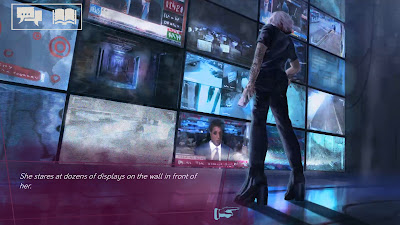
The most interesting aspect is probably character models. On a technical level… well, again, it’s a twelve-year-old game. It doesn’t have as many polygons as we’re used to. However, the art design and the character… I don’t want to say “animation”, but “direction”, is incredible. In some ways, this seems like the best character interaction I’ve seen in a game yet. People will lean in to make a point, quickly glance to the side as they collect their thoughts, cower in fear, or just smoothly and serenely watch your reaction. It’s slightly exaggerated, but in a good way, like… well, like what you would expect in a vampire movie. The individual characters don’t have as many graphical details as you’d see in, say, Dragon Age: Inquisition or The Witcher 3, but they’ll seem much more engaged during your conversations, drawing you in with their body language in a way that other games rarely attempt.


Of course, the character graphics are just an entree to the most famous aspect of V:TM:B: the dialogue and story. It’s a famously sprawling and open-ended game, with a huge level of player agency and latitude. You’ll quickly connect to these NPCs, and be drawn into their stories, and be motivated to shift your own personal story in response.

That sense of personality may actually give this game an edge over the game which it most reminded me of: the original Deus Ex. V:TM:B is the first game I’ve played since then which has captured that same sense of wide-open possibilities, with significantly varied options for approaching and solving the obstacles you encounter. I don’t want to over-exaggerate the point; in particular, it isn’t possible to complete a pacifist run of V:TM:B. But it’s still a wonderful feeling, and makes me feel a sense of loss. After such amazing, ambitious games at the turn of the millennium, it feels like AAA development has taken a step back into safer and, frankly, more boring designs. The Deus Ex sequels are a good example: while Human Revolution was a really fun game (I haven’t yet played Mankind Divided), it largely simplified the game into a series of levels, each of which supported either stealth or combat options. There’s no longer that sense of living in a fully-realized world where your actions are only limited by your imagination.

Okay, again, I’m probably over-exaggerating this… any game can only support the ideas its creators put into it. But still, this one does a fantastic job at giving the impression of freedom, which is what I crave.


Shifting gears slightly, some mechanical notes on my build and strategy so far:

I LOVE the character creation process. It’s like a funhouse mirror version of the awesome system from the mid-to-late Ultima games, where you answered a series of moral quandaries posed to you by a fortune-teller gypsy and received a class as a result. Here, you are posed with some slightly askew scenarios. How do you make your way into an exclusive nightclub: slip in the back door, pose as a Hollywood star’s manager, or bribe the doorman? How do you get rid of a dead body? What do you do when confronted with a lover’s spouse?


As a result of these questions, you are assigned your vampire clan. Each clan has its own unique strengths and weaknesses, and the most immediately visible effect is the allocation of stat points on character creation. However! Their uniqueness goes quite a bit further than that. Each clan has a completely different appearance, from the bestial Gangrel to the deformed Nosferatu to the elegant Ventrue. Male and female player characters will also have different starting outfits to express their look. Other vampires will react to you differently based on your clan’s reputation, and you will have different dialogue options as a result. V:TM:B goes further than most RPGs, though, and your clan doesn’t only affect your stats and dialogue, but can affect your core gameplay as well. The Nosferatu are very powerful and intelligent, but are obviously monsters, and so they cannot walk around in the streets like other vampires lest they attract attention; instead, they move about through the sewers to avoid being seen. Malkavians are completely insane, and speak completely differently from everyone else. You also have access to completely different special powers, which could include things like blood magic or heightened presence or super-speed.

I’m playing as a Toreador, the clan of artists and actors. Unlike most vampires, who tend to shun humans or prey upon them, the Toreador delight in the company and adulation of mankind, and tend to cultivate followers among humanity. I’m enjoying the role-playing that comes along with this, playing as a vaguely decadent and casually benevolent creature.


The game’s stats reflect the glory days of RPGs where non-combat skills got as much attention as fighting ones. I’m primarily pursuing the social skills, boosting attributes like Charisma and Appearance, which helps increase my Persuasion and Seduction abilities. I’m now up to about 8 in both of them, which I think is the effective cap for in-game benefits. I’ve completely abandoned my core physical attributes of Strength, Dexterity, and… the other one, leaving them at my weak starting levels of 1 point each. These are mostly just used in combat, which I generally try to avoid. You can’t COMPLETELY avoid it, and in particular you are forced to fight maybe half of the boss-level characters you encounter; but the “Bloodbuff” ability will immediately set all stats to the max level of 5, so I just activate that ability on the occasions when I need it.

Speaking of abilities: so far I’ve left Celerity at 1, to avoid Masquerade violations. Presence doesn’t seem all that useful, so I’m leaving that at 1 for now. Auspex, though, I’ve taken to 4 and will shortly bring to 5. This will allow a Bloodbuff-style boost, increasing my Wits and… Intelligence, maybe, by 3 each. After crunching the numbers, it’s quite a bit cheaper to bring Auspex to 5 and leave those at 2 each than the other way around. This does require expending some blood power, but so far that hasn’t been a huge problem… I can pretty easily recharge between missions, and I rarely need to use Auspex more than once in a given run.

All in all, I think I’m getting close to nailing down my desired social skills. I think I have a fair amount of game left, and will probably get a fair amount of more XP (along with more skill books). I’ll probably divide any additional points roughly equally between security (lockpicking), computers (hacking), stealth, and melee, with maybe a little unarmed combat.


Speaking of which: I’ve been focusing on hand-to-hand combat, and am quite happy with the knife as a weapon. It’s very fast, does good damage, and seems effective against a range of characters. I avoid fights when I can, but when I can’t, I can still often sneak into range and either stealth-kill (against humans) or initiate combat from close range (against monsters). Against bosses, I’ll often active all 4 of my blood powers, rush in, and can often take them down before the powers expire. Bosses sometimes have unique mechanics that require more strategies, but I can often figure it out during the initial fight; if not, I’ll usually have a handle on it by the second time.

If I can generalize slightly: human opponents tend to be physically rather weak, but very perceptive. Stealth is difficult to pull off: you’ll need to pay attention to their movements, orientation, and your own level of illumination as well as how much noise you’re making. You can easily take down a human in hand-to-hand combat, even if they’re packing heat and you’re using bare hands. However, there tend to be extra rewards for completing missions without killing humans (even enemies), so it can be worth the extra effort to find the pacifist path.


In contrast, monsters tend to be much more physically threatening. They can take a lot of damage, and, more worryingly, they usually deal “aggravated” damage to you, which hits harder and takes longer to naturally heal. However, probably as a balance to this, they are almost ridiculously oblivious to their surroundings. As long as you stay in stealth, you can usually avoid combat, even if they’re staring straight at you from six inches away in direct light. And this is with me just having a measly 2 points in my stealth skill.

Avoiding fights is generally the way to go. As in most well-designed games, you don’t earn XP from defeating enemies, and you can even sometimes earn bonus XP by not killing anyone. Enemies will occasionally drop weapons, but you can’t carry more than one of any kind and so there’s not much of a benefit there.

If you DO fight, though, it tends to be relatively fun. The controls aren’t exactly amazing by modern standards, but they’re much less frustrating than I would expect. I think it’s actually one of the better-feeling melee-combat systems of the era; I would rank it far above Morrowind, for example, or crowbar-combat in HalfLife 2. Selecting a weapon can be a bit awkward - you need to tap F1 multiple times until you cycle to the one that you want - but if you stick with one weapon all the time that doesn’t matter. You attack with the left mouse button, unsurprisingly. What’s kind of cool, though, is that you perform different styles of attacks based on the directional keys you’re pressing while attacking. For example, with the knife, attacking forward will jab; attacking to the side will slash them with the blade; and attacking will pressing back will actually trigger this cool leaping attack where you jump up and then pounce down on them. The animations for these moves are actually pretty impressive (again, for a 12-year-old game), which lends a lot to the stylish feel of the game.


I’m fairly used to the tedious bookkeeping that comes along with many RPGs, like returning home or making camp to heal after every combat, visiting the blacksmith to repair damaged equipment, and so on. V:TM:B has some cool innovations here that tie in well to the lore and also lead to fun gameplay. Health is an obvious one. You are, after all, an immortal being who cannot ordinarily be killed. As such, you naturally and automatically heal all damage done to you over time. This happens at a slow rate, so you can't rely on it during combat; but you also don't need to think about it too much, since usually you will have regenerated by the time the next combat rolls around.

Interestingly, your "blood power" (a rough equivalent to stamina or mana in another game) does not naturally regenerate. I often refill this by visiting compliant humans I have previously seduced, but depending on my location I might just bite the neck of a convenient victim, or suck the blood from some delicious rats. You can also carry around blood packs in your inventory, which can be used instantly at any time, even mid-combat, to regenerate both blood and health. Blood packs, in turn, can be found in the world, provided as rewards, or purchased from disreputable bloodbanks.


I don't have much to say about the economy in the game. So far I've picked up a couple of skill books and bought some better clothing (which gives slightly better armor stats). I've very slowly accumulated a little over a thousand dollars in cash, and not much in the current stores appeals to me much. The next tier of armor starts diminishing my dexterity, so I'll probably stick with the light gear for now. I think that if I was focusing on firearms, I would want to buy at least some ammo from the stores - I've picked up a bit in the world, but depending on how flexible you are with your firearms, you might want to stock up on more of a favored type of bullet.


So, we'll see. I'm hoping that there are more money sinks later in the game. I haven't even bothered selling any of the items I've picked up yet, like watches and rings. There is a "Haggle" skill in the game, which I haven't leveled yet. If it looks like money will be useful, I'll probably raise it a bit before pawning my trade goods. Heh... I only recently discovered that there is a maximum limit to your inventory, but it's a very high limit. I'd been playing for well over a dozen hours by that point, and had, uh, probably at least 20 or 25 items.

In many RPGs, your money sinks are housing or businesses. Neither has really been a factor here, though. You acquire upgraded housing as a reward for progressing through the game. I've loved the one business I'm involved in so far; I acquired a partial share by assisting the owner with some... business, and regularly earn money from it (which, again, I do not have a use for).


I'm getting dangerously close to talking about story, so let's shift gears and talk about the music!

It's awesome! It's very moody and varied. There's a mix of diegetic and non-diegetic music. Walking around in some areas has really fantastic atmospheric music, reinforcing the idea that you are an isolated creature in a dark world, trying to find your way.


Where it really shines, though, is in the club music. Which, first of all: nightclubs! I love them! I think I've mentioned this before, but nightclubs might be the reason I got into Shadowrun in the first place, and I'm constantly longing for nightclubs in more games. I feel delighted whenever I discover that a new game has a club. Well, so far V:TM:B has FOUR distinct clubs, each with its own unique architecture, clientele, mood, proprietor(s), and, most importantly of all, music.


If nothing else, I would love V:TM:B for introducing me to Chiasm, who created the above track. I hadn't heard of her before, but was so struck by that song that I went looking for her other stuff, and was delighted to find that she's produced a lot of awesome albums.

The music in V:TM:B spans multiple genres, but it's particularly strong in industrial music. I haven't historically been a fan of the genre, but have really come around to it in the last couple of years, thanks in large part to Invocation Array's fantastic debut album and a newfound appreciation of Trent Reznor's ouvre. V:TM:B's music belongs to a very specific era, which I love: it feels very grounded in this particular slice of depraved, alienated culture.

Okay! That's graphics, gameplay, and music. I hereby declare this initial post complete. Of course, I have been taking a lot of screenshots as I play, and have a fresh new album up for your perusal. It contains light spoilers for the first, oh, maybe ten hours or so of the game. And now I'm gonna dive right back in. Amongst other things, this is one of the more addictive games I've played lately, to the point where I've been missing my bedtimes. Totally worth it! Even if my dreams turn darker, it's because things are so interesting.