It occurred to me a month or so ago that I might want to officially note here that I'm no longer on the major social media platforms. I've personally had the experience in the past where I can't find someone and my mind quickly jumps to "Oh no, did they block me?! What did I do?!" I never announced I was leaving or anything, so I wanted to reassure anyone else whose mind might work in the same way that, no, I definitely didn't block you!
I've had a hate/hate relationship with most social media for quite a few years now. It wasn't always that way. Just now I was looking through my archives for social media references, and stumbled across someposts from many years ago. There was a moment when I was a big fan of Facebook: a way to keep in touch with my friends from college after we all moved to different cities! But I soured on Facebook in particular fairly early on, mostly because I couldn't trust them. They aggressively rolled out new changes and features that didn't give you any options or required you to explicitly opt-out, and always in the direction of less privacy and less personalization. There was a period back in... 2007 or so, I think, where I was doing some early mobile software development with the Facebook API, and I was shocked at how much data I could see from other people on it. This was in advance of the Cambridge Analytica scandal, and in retrospect I wish I'd complained loudly about how cavalier Facebook was with user data. For a long time I kept Facebook as a site I'd log into once every couple of months and scroll for a couple of minutes: the saving grace was that their algorithm did a decent job at putting important information at the top of my feed (new births, new careers, new moves), and I would just log off again for a few months once I got past that stuff. But after the last election and the announcement about revising their content moderation policy, I was out and felt compelled to vote with my feet. Zuckerberg's fawning obeisance at the White House reassured me that I made the right choice. I opted to straight-up delete my account, not just suspend. Facebook (and the other networks) do have an option to download your data before deletion, which I did; it's hanging out on my hard drive, I kind of doubt I'll do anything with it but if I ever did want to see my old posts or photos they'd be there. I went ahead and deleted my Instagram too to make a complete break with Meta; I don't think I ever posted on Instagram, and hadn't been viewing it much recently, so that wasn't a big move.
I'd deleted my Twitter even earlier. I was never very active on Twitter; I mostly saw it as a replacement for my beloved Google Reader, as many people and organizations I was interested in deprioritized or removed RSS content. I think I made a handful of posts around 2010 or so, including a couple of Game of Thrones memes, but for the most part just followed people I found funny and/or insightful. I should have removed Twitter shortly after the Musk takeover, instead I stuck around until the actual site performance started tanking. As with Facebook I did a full account delete, but I'm sure nobody ever noticed. I'm really glad that I got out when I did, it sounds like things have gotten even more miserable since, with the addition of paying for viral tweets, Grok, and the increasingly violent and unhinged agitation of the owner.
I guess that's it! I still use a couple of social-y apps but don't really post anywhere. I've been enjoying Bluesky as a straight-up Twitter replacement; it feels a lot like Twitter did back in 2010, which is nice. I'm sure at some point it will stop being fun and I'll get rid of that too. I've had a Reddit account for ages, but Reddit doesn't really feel like social media: nobody follows anyone, it's all about community discussions. I rarely post there, when I do it's in very niche subreddits about obscure video games and podcasts. And I still have LinkedIn, which feels a lot like Facebook used to, in that I'll log in once every couple of months to see what people have been up to.
This blog is kind of a social presence for me, I suppose, though I very rarely post personal things on here. If you'd ever like to catch up, please shoot me an email or text! I feel like our species' experiment with social media has largely ended in disaster, I'm curious if we will find an improved path going forward (possibly via the fediverse or some other innovation we haven't heard of yet), or if we'll RETURN to more old-fashioned analog ways of relating.
This post is kind of a follow-up to my book review of The Four Pillars of Investing. In that post I was left mulling over the idea of getting a TIPS (Treasury Inflation-Protected Security) ladder for a Liability Matching Portfolio (LMP), replacing my current strategy of maintaining and spending down a diversified portfolio of stock and bond funds.
To briefly recap: the appeal of a TIPS ladder is that it completely eliminates the uncertainty in retirement planning. You are buying a rock-solid guarantee to receive certain payments, adjusted for inflation. Our goal in retirement planning isn't to die with the most money, it's to ensure that our needs are provided for. A phrase Bernstein has that I like is "When you've won the game, it's okay to stop playing." So over the course of our working life we can build up our nest egg by riding the volatile up-and-down of stocks. Once we reach a point where we can purchase that guaranteed real income for life, we can do it, and not worry about sequence of returns risk or runaway inflation or any of the many other concerns we might have.
I have a few hesitations. First is just changing my strategy at all; as Bernstein also says, sticking to a sub-optimal strategy often has better results than chasing superior strategies.
On a technical level, one issue I've been grappling with is where, exactly, I would hold my TIPS. I think Bernstein's assumption is that you would have it in a traditional IRA at a discount brokerage. In this setup you can purchase arbitrary holdings, including specific government-issued bonds, and don't need to worry about taxes until you withdraw the funds for spending.
That isn't really an option for me, though. The bulk of my tax-deferred retirement savings are in a 401(k); my particular plan has great options, but it isn't a brokerage, so I can't buy specific bonds in it. I do have a Roth IRA, but it isn't large enough to hold the ladder I want; also, I believe the conventional wisdom is that it's best to hold high-growth investments like stocks in a Roth since you won't be taxed on any appreciation. And I don't want to start contributing to a new traditional IRA, because that would make future Roth conversions a lot more painful.
One possibility would be to wait until I retire or leave my job (which may not be any time soon - more on that below!), roll my 401k into a traditional IRA, and proceed from there, and I suspect that's what most of Bernstein's clients would do. But who knows when that would be, and at that point I think I'd be effectively boxed out of any future contributions to a Roth. Not a bad thing if I'm actually retired, but I think it's more likely I'd pick up another job in the future, and I'd like to keep the Roth door open.
By default, that leaves purchasing the ladder in a taxable account. All of the early guidance I've read has strongly warned against that, for the simple reason that you have to pay regular income tax (not capital gains tax) on all the interest generated by your ladder. TIPS also have what is called "phantom income": the principal amount is adjusted for inflation each year, and you need to pay tax on that adjustment, even though you don't access the money until maturity.
While doing this research, though, I found that "I bonds" can make a lot more sense in a taxable account, so that became my first step. "I bonds" are more like a traditional EE savings bond: you buy them directly from the Treasury, not a brokerage, you can hold them until maturity or sell early, and redeem with the government. Like TIPS, though, Series I bonds are adjusted for inflation, so buying $1000 in I bonds today will give you back an inflation-adjusted equivalent to $1000 in 2054 dollars when they mature, in addition to the fixed rate of interest they generate.
This is a good time for buying I bonds. Like most products, they paid essentially 0% interest for the last decade-plus; now, there's some positive interest, in addition to the inflation adjustment. The main downside is that you have to buy them from the Treasury Direct website; I didn't find this quite as painful as its online reputation suggests, but it definitely feels like a circa-2003 website. The other downside is the limited purchase amount: each person can only buy $10,000 in I bonds each year. (Though people with trusts or access to other legal entities can legally purchase more.) They do seem great, though, and I'm happy to be on this train now. There's really no downside: total inflation protection, no volatility, and very flexible redemption terms: you can redeem after 1 year, have to forego 6 months' worth of interest if you redeem before 5 years, and otherwise can hold for as long as 30 years.
So I bonds look great, but by themselves can't build a ladder, since you can only buy so many in a given year. My current tentative thinking is that I'll use these to fund additional spending after I start collecting Social Security. I'll likely try to delay claiming until age 70 (assuming rules remain the same) to maximize my benefit. Some back-of-the-napkin math suggests that, if I don't have to pay for housing, my Social Security benefit should cover most of what I'd need, and I bonds should cover the rest. So I'll continue buying those in the coming years, so long as there's a fixed interest rate of above 0%. I should have some "extra" from this, which I could maintain as an emergency fund or redeem before 30 years to help fill a pre-age-70 retirement ladder rung.
Which brings us back to TIPS. After several more months of researching, hemming and hawing, I've come to the tentative conclusion that holding them in a taxable account isn't the worst thing. One big reason for me in particular is that I live in California, which has a relatively high state income tax rate, and TIPS like other federal government bonds are exempt from state (not federal) taxes. So I think I'd relatively benefit more from TIPS in taxable than someone who lived in a lower-tax state.
I'm also already holding bond mutual funds in my taxable account - that's kind of a separate post, I've been trying to shift that over to my 401(k) but it's complicated. But anyways, the taxes you pay on an individual bond are basically identical to what you pay for a bond fund, even something like "phantom income". Over the long run, I'll be counting my TIPS, I bonds and Total Bond Market funds in the same bond "bucket" (when tracking asset allocation and directing future investments), so the bond funds will be shrinking (at least as a percentage of my portfolio) while keeping overall bond exposure the same.
So, at a high level, over the next, I dunno, maybe 10 years or so I'm imagining shifting from bond mutual funds into individual bonds making up a ladder.
I originally pictured this process as pulling a huge trigger, selling a gut-clenching number of stocks and buying a heart-pounding number of TIPS. And it seems like quite a few people do that. My main hesitation for doing that is uncertainty. There's a really good chance I will work for another twenty years, maybe even longer, and with that kind of horizon there's really no reason to not be in stocks: even if we had another 1929, 1987 or 2008 I'd be better off riding the wave. And I'm not completely sure yet what my living situation will look like: I'll very likely be in California, hopefully in the Bay Area, but housing has been by far my biggest expense for most of my life, and will have a huge impact on how much money I have available to purchase a ladder as well as how much money I need to get from that ladder.
Even though I was originally planning to get to a binary Yes/No decision, I've ended up with more of a gradual glide path, which is a little surprising but honestly feels pretty good. My current plan is that, rather than buying a ladder on the secondary market, I'll start buying rungs directly from Treasury auctions, likely with new issues of 10-year TIPS. I can keep this up for several years as my financial picture solidifies. There's a decent chance that the early rungs will mature before I retire, and that's okay! It means that particular rung will be a rolling ladder instead of a consumption ladder.
There are two big risks to this approach. One is that interest rates are slashed again and real yields go back to 0%. The other is that there is a big stock market crash and I have fewer assets available to buy bonds. That's the big argument for plowing ahead now rather than slow-rolling it. Still, as noted above, my time horizon is long even if I don't yet know the precise number of years. Even if both of those things happen, eventually rates will come back up and eventually the market will recover, and by the time that happens I'll be closer to retirement and have a clearer picture of what I need.
So, those were two big firsts for me this year: my first time purchasing a Series I bond on treasurydirect.gov, and my first time buying a Treasury security at auction. There are plenty of online articles and guides walking through how to do both of those things, so I won't recap them here. I bought the 2034 TIPS reissue via my brokerage; I'll probably try to do original issues for future years but from what I've read it doesn't really matter much. I'll definitely stick with the brokerage for buying future TIPS though, from what I've read buying actual treasuries (not savings bonds) at Treasury Direct is a nightmare.
One thing I haven't done yet, but might in the future, is buy TIPS on the secondary market. That's how most ladder purchases go, buying previous issues at a discount or premium to fill all your rungs. It sounds like you can only do that during a trading day, making actual bids on the market, which sounds kind of exciting - I can see why people get hooked on day trading! I am kind of toying with the idea that, going forward, I'll buy a new 10-year TIPS at auction and a 20-year TIPS on the secondary: for example, in 2025 buying a new issue that matures in 2035 as well as a 30-year issue from 2015 that will mature in 2045. I do like the gradual approach that implies, but haven't committed to doing it yet.
If this is at all interesting to you, you may also like a recent video Rob Berger put out on TIPS ladders. I discovered his channel a few months ago and have been enjoying it - he has a pretty Boglehead outlook, a very calm and pleasant demeanor, and is good at talking about complex topics in a simple way. Many of his videos are about things I'm not interested in, which is fine, I just skip those; when other ones like this TIPS video appear, they're great for me to validate my understanding or learn something new. He does close with a good point that this doesn't have to be all-or-nothing, you could use a TIPS ladder to create a "spending floor" for, say, half of your expected expenditures, and plan to fund the rest from a 60/40 or 70/30 portfolio. My immediate response to that was "Meh" - the whole point of a TIPS ladder seems to be eliminating uncertainty, so why only half-commit? But I think that's good advice for people like me who may otherwise be frozen in inaction due to uncertainty.
Uh, I think that's it for now! This post is probably the best evidence to date that I am getting Old, I never would have thought I could get this excited about bonds.
I almost never write about my day job on here, but I've recently released a couple of mobile apps that were really fun to work on and that I'm actually enjoying using, so I thought I'd drop a quick note about them!
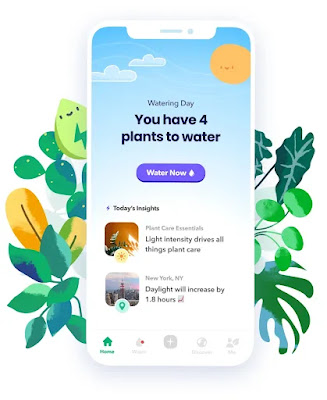
Late last year I helped develop the Android version of Greg, a plant-care app. It will identify your plant species, ask you some questions about it, and give you advice on how much sunlight it needs and how much water to give it. We recently added a new Communities feature where you can post questions about your plant (why are the leaf edges turning brown??) and other people in your area can provide advice.
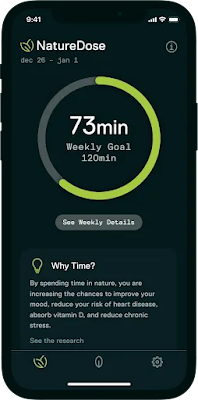
And today we launched NatureDose, a personalized nature prescription that monitors the time you spend outdoors. We created this in partnership with some smart folks up in Oregon who have been studying the many positive effects that spending time in nature has on our physical and mental health, above and beyond the benefits of exercise. I've been enjoying getting "credit" for my hikes in the hills and my walks in the neighborhood, and once it gets warmer hopefully some lounging on the beach!
After I wrote my previous post in April 2020 about my experiences with the Coronavirus lockdown, I started been thinking about what my follow-up post would be: I imagined a summing-up of everything that had happened, how I'd responded to it, and what I was taking away from it. In recent months, though, I've come to realize that there won't be a single moment or day that we can point to and say "This is when it ended." "Getting back to normal" is a process, not a point in time.
That said, today does feel like as good a day as any for this post. Today marks the two-week anniversary of my second Pfizer vaccine, and thus the day that I am fully vaccinated. Hooray!
One thing that has kind of surprised me, but probably shouldn't have, has been how quickly things have opened back up. In lots of ways the end of the pandemic feels eerily similar to the start. I still vividly remember the weeks in late February and early March 2020, when we in the Bay Area were first starting to seriously contemplate what might be coming. I was shocked when Santa Clara banned events of over 5000 people, shutting down professional sports in the county. Mere days later, gatherings of over 50 people were banned. Companies that could work from home started ordering their employees out of the offices, and a few days later we were told to not congregate with anyone we didn't live with.
And now, in May 2021, we got updated CDC guidance stating that fully vaccinated people can safely gather indoors with in small groups without masks, but must continue to mask in almost all other situations. And, just a week or two later, we're told that fully vaccinated people can do pretty much anything, with only a handful of lingering exceptions like flying on airplanes or attending large conferences. (Though the state of California is still holding to its original reopening date of June 15, at least for now.)
In my mind, I was imagining a much more gradual transition and longer timelines. I tend to think that things can be destroyed much faster than they are created: you can tear apart a building or a piece of electronics much more quickly than you can put it back together. I thought of the pandemic and the lockdown as a kind of destruction of our way of life, and what we're entering into now as a phase of healing and rebuilding. That might not be the best way to think of it, though. On a practical level, people are very eager to do the things they miss doing, and it's really hard to tell someone "This thing will be safe, but you need to wait until June to do it."
Another odd bit of mirroring is my ground-level experience with and observation of mask-wearing. In the early days of the pandemic, we were pointedly and repeatedly told not to wear masks: they were only for healthcare workers, and all we had to concern ourselves with was hand-washing and social distancing. I read some sources that were trustworthy and informed but not official, the one I remember most being Nicola Griffith's blog, which were ahead of the curve in offering advice. "Of course you should wear a mask!", they said. "This is a respiratory illness. It would be crazy if it didn't spread through the air!" Personally, I decided early on to be guided by the officials: CDC, county health, California regulations. I'm not a scientist, and don't have the time or mental fortitude to sift through all the data out there, so rather than drive myself crazy about what I should or shouldn't be doing I'd just follow the official guidelines.
Which all sounds well and good, but of course the guidelines kept changing. Which isn't bad! Guidelines are based on science, and science is an ever-evolving consensus rather than a monolithic religion. Still, even though I could draw comfort in knowing that I was following the right process, it was disconcerting to realize that I hadn't always been doing the right thing.
For masks, there was a gradual shift over time as they were forbidden, then accepted "if you are vulnerable and feel like you require one", then encouraged, and finally mandated. Here in the Bay Area, compliance seemed to move pretty much at the same speed as the official guidance, and from one week to the next or even day to day you could see drastic changes in peoples' appearances and behavior.
For the record, I really hated wearing a mask. I did it, and felt better about it over time, but it was probably the single most defeating, soul-sapping aspect of the pandemic for me.
There was a period of time in early 2020 where the state and counties closed down parks and beaches. Knowing what we know now, that seems kind of insane: outdoors activities are vastly safer than indoor ones. Even once they reopened, though, I continued to squat at home, going on some small neighborhood walks but not venturing out to any of my favorite local parks.
I finally broke my hiking fast in... hm, it might have been Memorial Day. I had gone for over ten weeks without hiking, the longest stretch by a long shot since 2003. I went to my normal spot, which includes a nice, broad, paved trail that climbs steeply uphill. It's wide enough that you can maintain six feet of distance while passing someone, which made me feel better about being out and around other people.
But, I wondered, should I be wearing a mask or not? Based on the guidelines at the time, you were supposed to mask up if you couldn't maintain six feet of distance, so technically I was fine; but I would be within that "danger zone" if folks weren't walking single-file or sticking to their side of the path. At first I would carry my mask with me, and mask up if it looked like people I was passing weren't maintaining that horizontal distance or if they were masked up. As the months went on, I got kind of tired of the off-and-on dance, and would typically just keep it on for long stretches, only taking it off very early in the morning or far up the ridge where I could walk for an hour without seeing other people.
All that said, I feel like I'm now going through the opposite process, from getting used to wearing a mask to getting used to not wearing a mask, and once again looking to others for social cues on what I should be doing. Now I default to keeping my mask off, but I still have it with me, and will pull it up if someone else happens to be wearing theirs.
There's been a huge shift in just the last two weeks, though. In just that time I'd say the trail has gone from roughly 80% masked hikers to 20% masked. It feels so nice to be able to smile at people again and see their smiles in return! I've been hiking this trail for so long that I've come to recognize a lot of people, and it's felt kind of emotional to actually see them again. We typically just nod or wave to each other, but last weekend an older woman said "It's so good to see you again!" and I immediately replied "I know, it's good to see your face!" And, it's also great to recognize that we've all been in this together: we've all been keeping careful, doing the right things, and now we can finally relax, thanks to the actions of one another.
I do feel incredibly relieved to be vaccinated, and feel a sense of awe at all the intelligence and hard work that went into creating the vaccines and distributing them to so many people. I've also been fascinated at the sociology and psychology around vaccinations, from when they were first announced through our current moment (in the US) of abundance. Lots of folks in my social circle seemed to have a sense of FOMO and went to great lengths to try and get vaccinated ASAP: Nobody fibbed about their age or health conditions, but they would spend hours refreshing web sites and hunting through Facebook groups and visiting pharmacies and doing whatever ethical things they could do to acquire a surplus dose. I felt eager, but not quite to that level: I reasoned that (1) I'm very far from the front lines, have very few in-person social interactions, no preexisting conditions, and thus was a few low-risk target for COVID; (2) There really weren't going to be major differences between what I could do as an early-vaccinated vs. late-vaccinated person; and most importantly (3) I'd much rather play video games or read books than navigate frustrating, broken systems to try and snag a shot.
California announced in late March that vaccines would be available to everyone 16+ starting on Thursday April 15, and officially stuck with that date, though there was a considerable loosening at individual sites as the date grew closer. Once the bookings opened up on April 14 I was able to get a slot for April 17, not bad at all! I'd been prepared to drive further inland or visit a random pharmacy or something, but I ended up being able to get one directly from my primary healthcare provider; the location closest to me was unavailable, but one 25 minutes away had slots, so I gladly booked that.
My personal experiences with the shot have been very positive. After the first dose I had some soreness in my arm for a couple of days, and that was it. With the second shot, I didn't even feel it go in, thanks to my awesome nurse. I didn't feel any soreness with that one, but did have a slight headache and a tinge of nausea for the next two days. I felt fine on the third day, then a little sick again on the fourth day, and have been fine again from the fifth day onward.
As many others have noted, while COVID has been a terrible plague on our civilization, it's actually resulted in a lot of us feeling much healthier than ever before. In the last 16 months I haven't gotten a single cold or flu. One interesting thing to think about is what things from the last year we'll take forward from us: tools, attitudes, habits, and other stuff. I suspect that one big thing a lot of people will do is maintain diligence about hand-washing, which is a little funny because coming out of the pandemic we now know that washing hands does basically nothing to stop COVID. But it's a habit that I and many other people have focused on, and I think there's a good chance that everyone who lived through this pandemic will wash their hands more frequently and thoroughly than those who didn't. I'll probably carry a mask with me throughout the cold season, and slip it on whenever I'm in a subway where someone is having a fit of coughing and sneezing, instead of just rolling my eyes and doing my best to ignore it like I used to.
Long-term, I suspect that people will return to live theater and sports games and indoor dining and all the other activities that have been curtailed. It does seem likely that food delivery services and online shopping will remain high: those industries were already growing before the pandemic and really exploded during it, and lots of people will probably continue using them.
I can already tell that, at least in the short term, we'll have a greater appreciation for gathering with other people: just hanging out feels way more special and meaningful than it did pre-pandemic. Likewise, I imagine that students will feel much more emotional about physically going to school and seeing their friends, after spending a year isolated at home.
But, who knows! I was definitely wrong about how bad COVID would end up being, and I could very well be wrong about the aftereffects as well.
One last thing I wanted to document was what I've been thinking of as my "COVID accomplishments": all of my home improvement projects during lockdown, most of which I probably wouldn't have done otherwise. These accomplishments were not evenly distributed throughout the crisis. For the first couple of weeks I was kind of in shock, thinking too much but not doing much. I pepped up a bit heading into summer and became really productive, feeling great about all the stuff I was knocking out. I started to feel a bit weary heading into the fall, and then pretty defeated as cases skyrocketed after Thanksgiving and shelter-in-place was reinstated. I hit my low point around the time of the coup attempt, and have been gradually rebounding since then, much less productive in my personal projects but much more in tune with the world and looking forward to reclaiming my place in it.
Anyways, here we go!
Fixed a loose chair leg in a stuffed chair.
Changed two burned-out lightbulbs in my (extremely high!) ceiling lights. This required precariously balancing a ladder on top of my entertainment center.
Fixed internet speed issues by getting a new router (my old one was from 2008!) and modem.
Did a massive cable management job on my entertainment center, transforming a rat's nest of cords spilling out all over to a nicely hidden configuration.
Rearranged my spare room: I moved my computer desk to another wall to avoid issues with glare, tossed out an old magazine rack, rehung a bunch of photos, cleared out closets, and just generally de-cluttered it.
Shielded some exposed electrical wiring under my kitchen cabinet. That's been on my to-do list for over a decade!
The Fridge Saga. I did a bunch of troubleshooting of a cooling issue, and eventually had to replace it, which ended up requiring some minor carpentry to extract it from its too-tight confines. The new one works great!
Repainted a bunch of walls.
Still in progress, but I'm replacing a baseboard.
I'm sure I would have done some of those things anyways, but honestly probably fewer than half. Maybe only one or two. It's been good to touch up my space a little and be able to bring that forward with me. Don't get me wrong, I'd much rather we hadn't had a global pandemic and those projects remained undone! But for better or worse I've honed my silver-lining-location ability over the last 14 months, and those are some things I've been particularly happy with myself about.
I started a little hobby project that turned into a midsized hobby project, and now it's done! Probably!
Lexencrypt is a word jumble, kind of. The letters in the grid constantly shift and cycle, and the initial impression is probably a bit disorienting. But as time progresses, a pattern eventually emerges, and the hidden word will begin to reveal itself. Find the word, type it in, and advance to the next board.
Or something like that! I've had a hard time describing the game when I write the summaries for the app stores, which is always a great sign. Personally I find the experience of playing it a little like solving one of those "magic eye" pictures, where it can help to relax and unfocus your eyes. Or you can take a more methodical approach, sweeping your eyes across row by row until you find a string of letters that form a word.
I slapped together a bare-bones version of the game for my birthday party earlier this summer, and have just pushed out the first update, which turns it into more of a proper game. It now has simple sound effects, tracks your game stats, and, most importantly, saves your game as you progress. There are some new surprises to find for people who make it deep enough inside.
Lexencrypt is available for free on Google Play and the App Store! Below, some typical ramblings on how I got here.
The origin of Lexencrypt was the title screen for a game called "Something Strange" that I wrote back in high school. That was a QBasic game, and like almost all of my games of that era it was a text adventure. I wanted to do something fun for the title screen, though, so I made a little text thing that would randomly fill the screen with letters, constantly cycling between them; but when a letter in the right position randomly rotated to the right character, it would turn white and freeze in place. So you would be left with the words "SOMETHING STRANGE" standing still in the center of the screen, while all around it the alphabet roiled and pulsed.
Many years later, when I was first learning Android development, I whipped up a game called "Nonsense" based around the same concept. I would pull a random word from the dictionary, pick a random place on the screen to place it, and then start flipping characters. Over time the tiles would land on the right letter, and you would then type it in to win. I added a sense of progression to it; I forget now what all I did, but I think I started using different colors or something, and would also start playing music (from MediaStore!) once you got deep enough.
The first physical Android device was the G1, which was a terrible device to develop for: it had a touchscreen and a trackball and a slide-out keyboard. But Nonsense was, I think, pretty fun to play on that phone; the keyboard made it feel natural to tap out the answer once you found it.
This would have been back in... 2008 or 2009, maybe? I'd completely forgotten about it until a friend recently reminded me of it back in the spring, so it's one of the things that I thought of when pulling things together for my birthday party.
I decided to use the game as an excuse to learn Flutter, a newish development platform. I'm generally highly skeptical of "write once run everywhere" systems, but in this particular case it made a lot of sense: my party guests were a mix of Android and iPhone folks, and while I could have taken the opportunity to finally learn Swift, I instead opted to pick up Dart (my micro-review: I would like it a lot more if I didn't already know Kotlin) and add the possibility of making a web app version.
Like most times I've learned a new platform, I started off with the sample app and then just kept adding things and changing stuff. I'm sure that my code style is garbage, and I wouldn't ever use it as a showcase, but it is a lot of fun and feels gratifying to just hack around and make something new.
While working on it, I mercilessly cut out all features that didn't feel absolutely essential to my core delivery for the party: multiple boards to advance, and eventually launching a new URL to continue the scavenger hunt. Even with that minimal portfolio, it took a ridiculous amount of time to make. I kept a list of things that I wanted to do if I ever wanted to polish this up.
It was pretty interesting to think about all the differences between this app and the much older one. A surprising difference is that this one feels slower, despite today's chips being significantly more powerful than in 2008. Part of that might be the Flutter runtime, part might be the significantly larger screen resolutions pushing more pixels. I might have been drawing on a raw Canvas back in 2008 but I honestly can't remember. Anyways, I got it to a point that I was pretty happy with, using some tricks that I almost definitely wasn't using over a decade ago.
Releasing the app was pretty fun, and went a heck of a lot smoother than I expected. I'd heard horror stories about the Apple app review process, but it wasn't too bad at all for me. I did get held up pretty early on by a request for a video demonstrating how my app was used; that definitely makes sense, as it's (somewhat intentionally) kind of disorienting when you first open it. I used the built-in iPhone screen recorder to make a movie of using the app, with the microphone turned on to capture my voice talking through what it was doing, then uploaded that to an unlisted YouTube video and included a link in my Test Flight submission. Once that was in, I was approved for beta testing in less than a day, and once I applied for release to the app store, I think it took less than 12 hours.
Google Play is, as always, a different beast, run by implacable robots instead of humans. This submission actually took quite a bit longer than before; back in the day Google was (in)famous for being the Wild West and letting any random app up, but these days they run tons of automated tests and malware scans and stuff. It's still just a couple of hours, though.
After taking a break to digest all the sausage and cake I ate on my birthday, I've been continuing to work on the game over nights and weekends, running down that list of deferred features from before. I'm getting (slightly) better at grokking the Flutter-y way of doing things and can phrase my Google searches more effectively, which has significantly sped up my progress.
There's still more that I could do, of course - there are an infinite number of Ideas in the world - but I'm pretty satisfied with where things are at now: simplicity can be good, and there's a nice variety of things happening up through level 50, which feels like enough to keep people busy for a good while. This seems like a good stopping point for development, barring any bugs or other unexpected events.
This was a fun little one-off experiment, a far cry from both my usual personal game projects and my usual professional app projects. I doubt I'll do much like this in the future, but it was good to stretch some muscles that I haven't used in a while and make a thing. And, heck, maybe I'll revisit this concept again in 2032 and make yet another version!
I had a milestone birthday this summer. It turns out that 2020 is not a great year for celebrations!
I'd started vaguely thinking late last year about what, if anything, to do for the occasion. For the last couple of years I haven't done any events, instead opting for solo backpacking trips or marathon gaming sessions or other low-key "me time" events. But it seemed appropriate to mark the occasion somehow. I started to think through some possibilities: maybe renting out some venue (an arcade? a park?) or just crashing at Crissy Field for a come-as-you-are thing.
Needless to say, COVID put all that on ice. Like a lot of people, I think I was in denial at first, hopefully thinking that "Oh, if this is all over by May, then people will be relieved to see each other in person again, and my party could be a great opportunity to do that!" And I felt very fortunate that I hadn't made any big plans yet; I feel really badly for people who planned 2020 weddings or otherwise had sunk a lot of time or money into something that COVID took away.
At a certain point, I finally accepted reality: no matter what government regulations were or weren't in place, the virus definitely would still be around, and people wouldn't want the hugs and homemade cake I had planned. (Well, maybe some people would, but those same people would be the riskiest ones to be around.)
By this time, though, I'd gotten attached to the idea of having a proper birthday celebration. At some level, it felt like it would be giving up to fall back to my traditional low-key solo outing. And, with everyone's social lives so constrained, I thought it would be more important than ever to have an opportunity to bring people together. One of the hardest things for me about the COVID era has been the monotony: days seem to bleed into each other, with so little changing in my daily experiences, and I find myself really starved for novelty and experiences. So, if I could somehow make an experience for others, then that might be something they'd enjoy. And in the meantime it would give me something to do other than get mad at politics!
I brainstormed for a while about what to do. The obvious solution was "Host a Zoom call," but I was pretty leery of it. I've been getting pretty burned out on Zoom, and I'm sure lots of other people are too. And the scenario just seemed kind of depressing to me: opening a laptop and seeing a dozen people in tiny little squares on the screen, all staring at each other and doing the awkward "Hi! Can you hear me? Yes, I can hear you, can you hear me?" thing.
But, I definitely did want to see other people, so some sort of video chat would be a very welcome component. I started to mull over the dynamic of a traditional physical birthday party and how I could adapt some of that experience to cyberspace. Everyone doesn't all show up at your front door at the exact same minute: there's usually a gradual ebb and flow, from early birds through late stragglers. There are clumps of people talking with each other. There's music, and food, and lots of chatter.
The more I thought about it, I really liked the idea of some sort of staggered arrival to a video call. What if there was some sort of activity for my guests, a game or something, that would lead into the video? That would add more variety and fun, and also lend a nice cadence to the day. I flashed back to some of my earliest childhood birthday parties, which featured scavenger hunts, with each guest hunting for treasures and all coming together at the end for cake. That sounded perfect!
As I brainstormed more, I gradually came to realize that what I was doing was really creating a game. The overall process for putting together my birthday party was shockingly similar to how I made my Shadowrun campaigns. I had a big ole' Google Doc where I mapped out the stages, the overall arc of the experience, various ideas I had. As the idea was refined I edited it more and more tightly, stripping out bad ideas and foregrounding the fun ones. I created a burndown checklist of all the tasks I had to complete to pull this off, which grew for some time before gradually diminishing. I made a separate Google Doc for the copy, writing fiction and instructions and all the narrative glue to pull things together.
That narrative ended up being pretty fun. This part actually ended up being a little backwards: in my Shadowrun games, I often zero in on a story relatively early on and then build out missions to support that story. For my birthday, I had all the missions planned first, then realized that it might be annoying to just say "Do this, and then do that!", so I whipped together a lighthearted and silly story to tie everything together. Which, amusingly, is much closer to how AAA game development typically works, with the writers brought in to the process after everything else is done.
Anyways... here are some highlights! Let's see... I think I'll focus on the order of how people experienced this, versus the order of preparation.
I sent out an evite invitation to the party. I don't think I've ever sent an evite before, but I receive them decently often. It's what I would have used for a physical party, and I think it helped set the tone.
Evite isn't a great site, and has really annoying ads and upselling (and upselling to remove ads), but it worked pretty well. It's simple, everyone already knows it, and it's easy to track what's going on.
Actually, I take that back: One thing evite is really bad at is RSVPs. For typical parties it doesn't matter at all, you just need a ballpark number while preparing and want to encourage people to come at the last minute. But in my case, I had logistics to consider. I needed to mail out physical supplies, which meant I would need to mail everything a week in advance, which meant I would need to order everything several weeks in advance, which meant I would need to know exactly who was coming early-ish. But evite doesn't have any support for requiring RSVPs by a certain date. After some Googling, I learned that their suggested work-around was to limit the number of guests to the number who had accepted by your decided day. Which seems hacky, but whatever!
So, yes: shipping! I decided to make use of the US Postal Service while we still have it. There are some extremely affordable Flat Rate boxes, but the stuff I had in mind wouldn't fit on one of those. Fortunately, they do also have (free!) Priority Mail boxes, which are a bit more expensive (they're charged based on weight and distance instead of dimensions), but not ridiculously so. I got 17 "4" boxes for my 33 guests and started packing!
While this pandemic definitely sucks, we are very fortunate to be living in 2020 and not 1950 or even 1990. I was able to do pretty much everything online and through the mail. The USPS mailed me empty boxes for free, I packed them up at home, bought postage through USPS.com, scheduled a pickup, laid out all of the boxes by my mailbox, then several hours later someone came by to pick them up. No visits to the post office, no flagging down a carrier, everything was very efficient and socially distanced.
Inside the box, guests would find a cheerful and colorful warning sign, keyed to their personal time zone, about when the festivities would begin.
I printed these at... Office Max, I think? The per-sheet prices were extremely reasonable; the shipping was more expensive than the printing itself, but I was happy to pay to minimize my exposure risk.
After the stated time expired, guests opened their boxes, and found goodies inside!
The shipping manifest included:
One or more lei
One or more birthday party hat
A heartfelt typed letter from yours truly
Four sheets of paper with lines and circles on them
A Mysterious Treasure Chest with a 3-digit padlock
I bought most of the party favor things from Michael's. The heartfelt typed letter was also printed from Office Max. The treasure chest was really fun, and something I spent a long time sourcing. I had a very specific idea in mind, which would require a small box with a small but usable lock. I spent multiple hours researching until I stumbled across an excellent box at Michael's, which was also shockingly cheap ($3.49 per chest!). I bought the padlocks separately, which were also pretty cheap, but I had to buy from multiple vendors since no single seller had as many as I needed.
Around this time I started getting some confused text messages: "Where's the Zoom link?" I gave a few hints and nudges, but most guests figured it out on their own: it's Puzzle Time!
The first phase involved aligning the sheets of paper with lines and circles over the heartfelt typed letter. Tiny holes cut into the paper provided a screen into the underlying letter, eventually revealing the hidden communication: a URL!
Making this was one of many time-consuming elements of party prep, but was a lot of fun. I used an X-Acto knife to cut out the desired characters from one of the letters, taped to a sturdy piece of paperboard. I then used the paperboard as a template to cut out more characters from stacks of letters. I could do about 7 sheets of (flimsy) paper at a time, though my knife was getting pretty dull by the end!
I used two of the pieces of paper for each letter, then used a ruler and a coaster and some crayons to make my marks. Most of the markings went on the paper, with some of the edges marked on the underlying letter. The recipients would then align the edges with the paper to restore it to the original position. I included a couple of dummy papers too to keep it from getting too easy.
And, what was at that URL? More puzzles!
I'd overthought this landing page. Since I was mailing out the packages in advance, I was somehow worried that, like, some people would start working on the puzzles days before and get through it too early, having an unfair advantage over people who waited. What a dumb worry! This wasn't a competitive game or anything, and folks have better things to do than defy the wishes of the birthday boy. But, in order to prevent this imagined scenario, I added a content gate (again, my video-game-author instincts kicking into play). I asked a question that would be keyed to the day of my birthday. That morning, I would update the back-end with the correct answer, so nobody would be able to proceed before I was ready
.
For the record, I am not a web developer. I think the last time I made an HTML page was back in the 1990s, and my web skills are still at about that level. Still, since this wasn't a professional gig, I had a lot of fun with it. For the tech, I used Ktor, a Kotlin framework for web development, along with FreeMarker for templatized web pages. Everything was done with static content and URL redirects, no cookies or sessions or any storage. I hosted the site on Heroku, and, boy, I can see why it's so popular! Even with practically zero experience in dev ops it was a breeze to manage deployments. I purchases some novelty one-off domain names from Google Domains and pointed them at my Heroku apps. All in all I think I spent $8.03 on Heroku (one month of a hobby dynamo to get SSL, plus a tiny amount for traffic) and $12 for each Google domain (good for a year but I won't be renewing).
The "plot", such as it is, kicks in soon after this. The nefarious intellectual property lawyers from Hasbro, Inc. are furious at my reckless infringement of the Teenage Mutant Ninja Turtles copyright, and I have gone into hiding to evade them.
One big goal of mine while planning this out was to bring guests through a multitude of different channels and experiences, again evoking an old-fashioned treasure-hunting ethos that brings you through different environments, and also giving some more novelty to the experience and hopefully some moments of delight. In some ways I thought of this "game" as being a little like an ARG, weaving together various physical-world and digital-world venues with different clues people would follow as they hopped between them and followed the trail. There were a few big differences, though. ARGs are designed to be really hard to solve and take a long time, while I really wanted everyone to get through in an hour or so and had some decidedly non-tech-savvy folks on my invite list. ARGs also tend to encourage collaboration, while this game was more solo.
But, not TOO solo! I wanted to make sure that, early on, I could bring the guests together digitally, to get some of that sense of cooperation and collaboration, and also to give me a graceful opportunity to provide hints to people who were getting stuck. So, after solving the first couple of puzzles, I brought people into a private Discord server.
The event was scheduled to start at noon PST, and I was poised at my laptop throughout: one window open to the Zoom meeting where everyone would wind up at the end, and my Discord window open. I stared at it, wondering when the first people would come in. 12:05 rolled by. Zero people had made it. 12:10 came and went. Still zero people. I felt a sense of dread rising within my stomach. "This is just like the Antumbra offices all over again! I made the opening stages too hard! Nobody will make it here! They've probably all given up already! This is a terrible birthday party!"
And then, at 12:11, the first guest arrived: my good friend Josh from high school! He was followed seconds later by a current friend from work, and then more soon after. It was pretty remarkable that folks all over the country, from the west coast to the east coast, independently working on the same puzzles, completed them in almost the exact same amount of time.
I'd initially planned to do more game-y stuff within the Discord; my concept was to have a bot that you would chat with, and who would eventually send you on your way. After a lot of research, I eventually determined that I couldn't do exactly what I wanted, at least not without a lot more coding than I was willing to do. (Oddly enough, Slack and Discord could each do half of what I wanted: having a bot automatically communicate with you when you joined a channel, and having a bot respond to what you say in a private conversation with it.)
But it all worked out well. There was some good chatter in the main channel, and it was fun to see people gradually pop in as time went on: again, it had the cadence of a "real" party, which was exactly what I wanted. It was fun to see some people be prompt, and others arrive to see lots of activity.
The main meat, though, was a private message that the MEE6 bot would send, pointing them towards their next puzzle.
I have to admit that I am not a regular Discord user. At some point I'll probably get on it for real since more and more of my favorite game companies and communities seem to be moving there, but I am still stuck in my ways. Anyways, I poked around for a bit for various bots, the MEE6 one did the most of what I wanted and was easy to configure. It just sent this welcome message to everyone who joined the server, providing some more flavor text to the "quest" and pointing them towards two things: a Google Photos album and another URL to continue.
The album included a bunch of beautiful nature shots, all taken from the same backpacking trip. But what trip?
Some folks who know me very well, or who are big fans of Lord of the Rings, could probably guess it quickly. Others, though, could use the magnifying glass to zoom in on the writing of one particular photo, which would bring them within a Google search of the answer.
And, from here, they would (most likely) have to use Google Maps (or an old-fashioned atlas or something) to find what specific town near the track I was "hiding" in.
This eventually segued into another bit of fiction, as "I" have "escaped" from New Zealand and am returning back to the States.
The Donatello shout-out here was a late addition. As in my video games, I try to keep some narrative coherence, and periodically remind my players of the overarching plot arc. This was an extremely silly "plot", but I still think it was kind of fun, and it tickled me to remind my guests of the very low stakes. And, in a weird way, it almost felt kind of like character development... for me. (For the record, I was a huge fan of the Ninja Turtles as a kid, and hadn't thought about them at all for decades, and think fondly of them now and listen to their official podcast.)
The next puzzle comes up soon: a long playlist appears, and the guest is challenged to figure out what one song in it doesn't belong.
This was one of my favorite kind of puzzles, with many possible approaches and solutions. You can just brute-force your way through it. Wrong guesses aren't really penalized, although they did result in this menacing warning.
A simple scan through the playlist will almost immediately reveal the theme: the vast majority of songs are about California, and, heck, have California in the title. Some of them are more subtle: Free Fallin' doesn't have any California places in its title, but the lyrics do ("Livin' in Reseda", "Down Ventura Boulevard", "Over Mulholland"). But you could narrow the possibilities down pretty quickly, then either listen to them, or crunch through them.
It was pretty important for me to have a music portion to the party. Like I said before, I was trying to recapture some of the essence of a party, and music is a big party of that. I actually had a checklist of stuff I wanted to do: music, food, movies, games, chatting. I'd built out an entire movie puzzle that was oriented around the 80s movie The Wizard before cutting it out near the end; once again, I think my experience in "game development" has helped me evaluate this stuff and ask basic-but-easily-overlooked questions like "Is this as fun for people to play as it is for me to make?"
The solution to this puzzle was "The El" by Rhett Miller. I'm pretty pleased with that: most of my guests are either from California, and thus have a leg up on recognizing California place names, or from Chicago, and thus have some experience with the El. (And "The El" does, at a glance, look like it could be a Spanish name, in line with other items on this playlist.)
Curating this list was pretty fun. I did a lot of searching in Spotify and on Google to build up a big list, then gradually whittled it down to a smaller-but-still-longish playlist that would take about two and a half hours to listen straight through. I think maybe a third of the songs on there are ones that I'd never heard before. I tried to represent a mix of genres and time periods, but also cut out everything I hated. In the end I think there are only two songs on there that I really love ("California" by Grimes and "I Remember California" by R.E.M.), but there are a lot of bangers; I became particularly fond of the opening guitar lick of Sausalito Summernight and the bouncy fun of San Luis Obispo.
From the music puzzle, guests proceeded to the next part of the game: an actual honest-to-goodness game!
This was probably the most ridiculous, indulgent part of the whole project, to write an entire game from scratch, but I was dedicated to the idea: I love games, and programming, so I thought it would be fun to put something together.
I'll probably include a separate post about this later. It's a very simple and completely non-narrative game, sort of a word jumble type of thing. I used it as an excuse to learn Flutter, a newish cross-platform development ecosystem, and wrote my first-ever iOS app and first-ever web app. I had to be really strict about feature creep and do the bear minimum to make sense for my party, since as ever there's an infinite number of improvements you can make to any game.
But, yeah, it was totally unnecessary and fully satisfying to go through the whole process of releasing a new game to Google Play and the App Store, just so a dozen or so people could use it as a step along the scavenger hunt! The web site directed them to the App Store, they would download and install the game, play it for a few stages, then a new button would appear, they would tap that, and be taken forward into the next stage of the hunt!
(For the record, that's an animated GIF above. Most but not all of the Turtle content in the hunt was animated.)
This led into another "content gate". I probably overthought the "security" aspects of my treasure hunt; the odds of some random person playing my totally unadvertised game during the few hours that easter egg / backdoor were open was astronomically low. Still, I didn't want randos stumbling into my precious birthday party! So, since this link was accessible to anyone who played my game, I had guests verify information that came with their physical box. This is something that could theoretically be brute-forced, since, again, I wasn't really doing any session tracking or anything fancy on the server; so I also added a free-form text field, sowing doubt in the mind of a hypothetical hacker that even running through every possible combination would yield a correct solution.
Getting this wrong would lead to yet another warning. The list of my adversaries grows larger and broader!
This line eventually led to a numeric and audio puzzle:
This was kind of inspired by numbers stations, like Yankee Hotel Foxtrot. Here's the actual audio.
As I discovered during the event, that does not work on all browsers! Like a fool, I had only tested on Firefox, but apparently it doesn't work on Chrome (and maybe Safari?). But, by this point everyone was in the Discord server, so I was able to provide folks with hints. In the meantime, a few resourceful people were able to check the HTML source code and directly track down the .wav file location, which played fine when you open it directly.
Oh! Speaking of the source code, I'm pleased that people did poke into it, since I had a few more Easter eggs buried within.
If you haven't figured it out already, those audio numbers are the opening part of the Fibonacci sequence. For some reason this was in my head from an old Square One Mathnet episode. Thinking back on it, there was a LOT of PBS-type stuff in this hunt, from Carmen Sandiego geography to Square One math puzzles. Some people got it from Fibonacci, others directly calculated the sequence scheme, a couple needed help. A surprisingly large number of people didn't know what to do with the surprisingly large number that was the answer. The solution, of course, was to use it to unlock the combination padlock on their Mysterious Treasure Chest!
There were a whole bunch more trinkets inside, including:
One or more noisemaker.
One or more tightly-wrapped (albeit stale) brownie.
A set of Teenage Mutant Ninja Turtle-branded party napkins.
A set of Teenage Mutant Ninja Turtle temporary tattoos.
A pen.
A card reading "Shine a light on me!"
This shifting between analog and digital puzzles just tickled me so much. As I said later, it reminded me of the rhythms of my favorite shadowruns: you do legwork to gain access to the facility, then the decker jacks into the matrix to open some doors, then the team advances and finds a port on the secured network, then the decker takes over the facility, etc. The chaining together of physical space and cyberspace is one of my favorite things, both to experience and to create.
In this particular "run", guests had to figure out what the heck was going on. To jump ahead to the solution: the pen included a blacklight. Shining the blacklight onto the card revealed a hidden message written with invisible ink.
Not a particularly helpful message! This says "Other side!". Flipping the card over and shining the light reveals yet another message, "Look There", between some arrows. A few people were stumped by this step, which was guiding them back to the arrows way back on the first "Please Do Not Open Before Noon PDT" cards. Shining the light on that would reveal the final message: yet another URL to yet another website, guiding you back into cyberspace once again!
I'd decided pretty early on that I wanted to do something with invisible ink, and I particularly loved the idea of hiding a message in plain sight early on, and having guests return to it later with more information and resources to extract meaningful data. The padlock was an obvious example of that, the greeting card with invisible ink a much less obvious one. Actually getting the ink took quite some doing! I'd initially thought of using lemon juice and having people heat it, but, as it turns out, this doesn't work well at all. I then went down a rabbit hole of making my own invisible ink with a reagent. You can find a bunch of formulas online, most of them don't work or don't work well. I finally found one that was good: you make the ink by mixing together tap water and baking soda, draw the message in it, then make the reagent by combining rubbing alcohol with turmeric. The message fades into invisibility, and the reagent brings it out really nicely. I'd gotten pretty far along this distribution plan, going so far as buying cute little bottles to hold the reagent, before belatedly asking myself: "Is it really OK to send 100% isopropyl alcohol through the postal service?"
I did some research and determined that the answer was a hard nope. Well, more like a hard please don't. Highly concentrated alcohol is considered an explosive. You need to declare it, hand it off in person to a postal employee (not a comforting thought in COVID times!), and it cannot travel on airplanes, only ground transport, and thus wouldn't be eligible for Priority Mail and wouldn't arrive in time.
While looking up these various inks, I kept getting ads for invisible ink pens, which I just reflectively pooh-poohed and barrelled past. After my reagent dreams went up in smoke, though, I revisited it, and ended up deciding that was the way to go. You can get them for really cheap; they're sold out in many places but I found a seller on eBay who was nearby and offered fast delivery. As a nice bonus, the invisible ink pen let me write much more compactly than I would have been able to with homemade ink, which would need a paintbrush or similar wider applicator.
And, at the end of all this, my guests each got an invisible ink pen as a party favor, so that's pretty fun!
That final web site came up with an encouraging note progressing the fiction, and a final "puzzle" to solve, which was really my final content gate: asking people to enter information from various clues along the way. Again, this was just mild paranoia on my part. I'd configured robots.txt and noindex, nofollow and all sorts of stuff to make sure these sites wouldn't be crawled or show up in search results, and the odds of someone randomly typing in these characters during the few hours the content was live were infinitesimal, but out of an abundance of caution I wanted to make sure that only folks on Official Party Business would make it through to the end.
The very last page was a cornucopia, a joyful explosion of animated gifs of the TMNT. I think there were around 40 altogether, mostly drawn from the original 80s cartoon but some from later incarnations. It was all very silly and fun. You could click a button at the top of the page, which would play the theme to the Teenage Mutant Ninja Turtles: Turtles In Time arcade game.
And at the bottom I had a sincere and heartfelt "thank you" to everyone for participating, along with a link to what everyone expected all along: a Zoom call! I actually sprang for one month of a Zoom membership to get this; again, it was cheaper than renting a place or something would have been, so I was able to justify some expense.
Continuing the theme of "overthinking everything", I was worried that the call would feel chaotic with more than a dozen people on at a time. I'd initially thought of having different "rooms" linked from that page, again emulating something like a traditional party feel: I would hang out in the "Kitchen" room, but you could also pop into the "Living room" or the "Balcony" or the "Front door" to see who else was there and have little side-conversations. But, it turns out that you need to purchase a separate Zoom subscription for every simultaneous call you want to have, and, uh, no thank you!
The first person to pop in was my youngest brother, who had endured a biblical flood which had destroyed his parcel, but showed resilience and pressed on through the digital realm into the Zoom call. It was just the two of us for a little while, and he was good-natured about my constant state of distraction as I monitored the Discord and my text messages to field technical inquiries with various levels of franticness.
The next person to pop in was Josh, who had been the first one into the Discord and thus won some sort of prize. Josh had received some help from his daughter, and it was really fun to see her.
And, to see kids in general. As more folks hopped in I enjoyed hearing about how different folks had responded to the situation, from the gleeful destruction of Young Ben to the grave concern of Silas ("Oh, no! Chris is missing!!").
The whole in-person (well, "in-person") thing ended up being really wonderful and lovely. My concerns about it feeling too crowded or chaotic faded away: there was a really great conversational flow, great mixing between people from different stages of my life who hadn't met before, and tons of good vibes. I realized after the fact that we'd had a conversation that lasted for nearly two hours without ever once talking about Donald Trump or COVID-19. I don't think I've matched that record before or since, and it was one of the many highlights of my birthday.
So, yeah! The whole project was really stupid and I never would have done it if I'd known how long it would take to prepare, but as the same time it's probably the most fun I've had all year and I'm delighted by how it turned out. I got lots of really great and kind messages after the event, too, and it felt really gratifying to hear that I'd provided a little bit of lightness into folks' lives. Even if it was a blacklight!
One of the odd things about our current moment is how people use oblique phrases to refer to it. Like, for example, "our present moment." I've been really struck by this in the last couple of weeks of watching YouTube videos and reading blog posts and tweets and Facebook updates and all sorts of stuff. How often people will say things like "Obviously, things aren't great now, and I thought we could all use some cheering up..." or "Because of the current situation, maybe you want to learn how to make awesome omelets right at home..." or "Like the rest of you, I've been seeing my home in a new light, and maybe these drapes can help brighten yours..." I've imagined someone in the future, say ten or fifteen years from now, playing back an old podcast or vlog or something and having to stop and wonder: "Wait, what happened back then? What are they talking about?" There's an elision in our discourse that's really fascinating to me: I think it's the first time in nineteen years that we've truly felt like everyone is on the same page for what we're talking about and explicitly calling it out is... I dunno, gauche or wasteful or something.
This post is partly a reaction to that. My experience isn't particularly interesting compared to what everyone else is going through now, but I kind of want to dispel that lacuna and talk about what's been going on!
I have no clear memory of when I first heard of the coronavirus. I rarely read science or health articles that pop up in my feeds, so I'm sure I saw a headline at some point and didn't bother reading it. I think the first sustained discussion of it I saw was in mid or late February, when I was briefly following Matt Stoller after reading Goliath: he was sounding the alarm loudly, and had been for some time: not just the looming public health crisis and cost of lives, but also the supply chain disruptions that even then were starting to show up. But, to be honest, I mostly dismissed him as a crank - he complained more about Obama than about Trump when discussing the coronavirus and seemed determined to kneecap any left-leaning politician.
I started to pay some attention in early March, when the first of my company's clients started mandating all their employees to work from home. I'm not totally sure what internal discussions they had leading up to that, but some executives had recently returned from an unintentionally extended stay in Asia, and it's possible that contributed to their decision. I started to consider actually taking it seriously a week later, when Google and Twitter started mandating all of their employees to work from home. At the same time, I was personally skeptical that there was a cause for alarm. Partly that's probably my generally optimistic outlook on life: I tend to think that things will work out fine, and more often than not they do. I've also grown somewhat inured to short-term alarms about, say, large storms or other disruptions. There's often a media frenzy, people rush out to buy bottled water and toilet paper, then everything is fine. I didn't want to be a "prepper" and deliberately continued living my life like normal, to some extent proud that I wasn't "freaking out."
This lasted, uh, two days. The second Friday of each month is our "Dev Friday," when the company caters in a meal for everyone and we gather for an all-hands (small-)company-wide meeting. The management team had been keeping an eye on developments: there was no official policy from any government body, but the accelerating private-sector-led lockdown efforts made it increasingly clear that there was some cause for concern. Early in the week we officially canceled our all-hands, reasoning that it might plausibly fall under the umbrella of "large gatherings" that had led to conferences and concerts and sporting games getting shut down. At the last minute, an announcement went out on Thursday afternoon that we would be working from home on Friday and for the following week.
That Friday and the weekend immediately following stand out as one of the more chaotic moments of the coronavirus crisis. Which is actually rather encouraging; on the whole people have been very careful and respectful. But that weekend there was a mounting crush on supermarkets and big-box stores as families across the Bay Area decided that they needed to stock up. I think this is entirely reasonable: we'd all been told to prepare to spend two weeks in quarantine if infected, and to minimize unnecessary outings and travel, so of course people who ordinarily would only keep a week's worth of food at home would suddenly decide that they need twice or triple or quadruple as much. But this all happened in a short amount of time, and we've all seen the result: alarming pictures on social media of bare shelves, no bread, no milk, entire aisles wiped out of bottled water (??) and such.
My own personal experiences were much calmer. I was mentally kicking myself for not making similar trips in the weeks previous when I was posturing (to myself! not even to anyone else!) at how chill and non-alarmist I was being. But, as I took inventory of my home, I found that I was in good shape. The big item people were worried about (and are still worried about) is toilet paper; but I've always bought that in bulk, had gotten a huge 48-pack a month or so before, and had more than enough. Likewise I was all good on paper towels and facial tissue and hand soap, all boring stuff that I buy in large quantities and keep around. On the food front, I keep a permanent small stash as part of my earthquake preparedness kit, and on top of that there's all the random stuff I have in my cupboard at any time. My amount of food was definitely sufficient, especially since, unlike an earthquake, I didn't need to worry about running out of water or losing electricity for my freezer or my stove. I had (and have) plenty of dried beans and grains and all sorts of stuff.
Still, while I had plenty to eat, I wouldn't be eating well. My normal diet includes a lot of fresh fruits and vegetables, which is healthy, but is not something that you can just stock up on. My thoughts immediately turned to my beloved local farmer's market, which I patronize throughout the year. Was it still going to be open? I did some Googling and did not get a clear answer. The official page for the market hadn't been updated in 8 years and, of course, didn't reference the coronavirus. I'd read that some local markets, like the one in San Carlos, were shutting down indefinitely. Another market organizer was quoted as saying, I imagine somewhat incredulously, "People need to eat food! We can't just shut down."
Fortunately, my market had the latter philosophy. I was somewhat nervous going there, having spent too much time the previous night scrolling through photos of doom and gloom from Safeway, Target, Whole Foods and other major retailers. In contrast, my market was totally fine. There were about as many shoppers as usual, and people seemed to be more conscientious about giving each other space. All the sellers were there and seemed to be in good spirits. I bought a little more than I normally would; fortunately it's the late winter and early spring crops in season, so the foods are already tilted towards sturdier and more storage-friendly options.
With these fresh foods, I determined, I was all set for the weeks to come. I tend to do a fair amount of my shopping online anyways, and could get necessary items shipped to me. I have pretty fast Internet for entertainment and remote working. I'd picked up my enormous copy of Capital and Ideology from the library earlier that week, giving me plenty of reading material. And... that was it! It felt oddly comforting to feel like I was all prepared and ready, still a little frightening to think of the changes in the world and the potential spread of illness, but I felt like my little corner was warm and secure and safe.
Immediately after that somewhat chaotic weekend, things somehow ramped up to an even more alarming tone on Monday. There had been some previous government movements over the prior month or so: Mayor London Breed had declared a State of Emergency in San Francisco before the first reported case in the city, and there had been targeted guidance against gatherings of 1000 people, then 500 people, then 50 people. On Monday, though, the Public Health Officers of most counties in the Bay Area issued by far the most strict thing yet: an official legal order to "shelter in place." Millions of people throughout the region were commanded to stay in their homes. The exceptions were vanishingly small: you could leave to buy food from the grocery store, or get medicine from the pharmacy, or to exercise outside. Anyone who didn't work in an "essential business" and couldn't work from home no longer had a job.
There was a fair amount of alarm over the order, coupled with acceptance. I started to wonder: How would it be enforced? Would cops start arresting people who are outside? That seemed ludicrous, but, to be fair, the idea of shutting down the economy also seemed ludicrous just a week earlier. Fortunately the orders were well-written, accompanied by a much longer interpretive FAQ that helped spell out what was and wasn't allowed.
The order was scheduled to last through Friday, April 7th, just over three weeks. Even at the start I was a little skeptical that it would be over that soon: either this was all a false alarm, which seemed increasingly unlikely; or we hadn't even started a pandemic, which seemed like it would definitely last much longer than three weeks. But having some sort of timeline was helpful. On the work front, we had initially envisioned rolling week-long work-from-home periods, deciding each Thursday whether to remain closed the following week; with the official Order in place, we could just point to that as our guidance for when to return to the office.
Everything kept happening faster and faster. We had barely gotten our head around the Shelter In Place order when the State of California issued its own Order later that same week. This was very similar to the Bay Area's Order, with one significant difference: It was indefinite, with no announced termination date. Needless to say, that felt ominous. But it was also somewhat cheering to think that what we had been doing for the last week was the right thing, that we were on the right track, and that more people were doing the same things. And I did have more and more of a sense of "we": a sense of pride and connection with my local community, knowing that millions of people around me are going through similar experiences for similar goals.
I joked early on that I felt especially well prepared to shelter in place. I'm a natural introvert and am perfectly happy spending time by myself. My favorite activities include reading, playing video games, cooking, and other stuff that I do at home anyways. That said, while I'm sure I have it easier than most people, it definitely has not been a super-fun experience. One early thing I needed to figure out was how to work from home. I actually really enjoy being at the office and, even though my job can easily be done remotely, I almost never work from home unless I have an appointment or some specific need to do so. I'd initially thought, optimistically, that at least work would be more relaxing: I'd be slicing two hours of commuting out of every day, freeing up ten whole hours each week, which sounded great. But after the first couple of days I felt the opposite: I ended each day drained, anxious, unhappy. I came to realize that I was working non-stop: not even taking walks during the day, not stopping for lunch, just hunched over my laptop endlessly.
I gradually rolled out more structure. One silly thing about my setup is that I have a home-office-type room here, but it's far from my wireless router and so my video call quality in that room is poor. I like working in my dining room, which has lots of natural light and a rock-solid wireless connection. But that naturally causes work to bleed into non-work. I started keeping a rigid work schedule: opening my laptop at a certain hour, setting an away message and tipping the lid mostly closed during lunch, and closing it altogether at another hour. For the first week I sat in one of my dining room chairs, but then I started rolling my office chair in to the dining room in the morning and rolling it back into my home office at night. I think that helps a lot too. Fundamentally, I'm really missing that hour of commute at the end of my workday that helps me disconnect from my work thoughts and get relaxed for my evening. I think these tweaks to my physical environment have helped. I still don't have as much separation as I would like, but I'm feeling psychically much healthier in the evening than I was before.
You'll read a lot of the same advice in articles on how to work from home. Try to keep a routine, shower, put on work clothes, and so on. My company has also made a strong effort to keep a level of social engagement during this time. In the physical office, people really enjoy going to get coffee in the morning. There are usually multiple "runs" throughout the morning, depending on which of two options people prefer and when they arrive at the office. On that first... hm, either Friday or Monday I started an ad-hoc Slack video call for a virtual coffee run: we're all in our own homes, sipping our own coffees, but we can all see each others' faces and chat about what we're doing, which feels really comforting and nice. That very soon morphed into a semi-official company-wide coffee outing as a recurring optional meeting invite. Originally it was on Google Meet (hangout), but, like many other people, we've found that Zoom has a much better interface for seeing lots of people at the same time (as opposed to focusing on the one person who's currently talking). I was initially skeptical that this would work, as it seems like having more than a few people in the same unstructured video call is a recipe for chaos. But it's actually been great, and an oddly accurate approximation for how our real-world coffee experiences go. A few folks are more chatty and extroverted, others of us are quieter but still chime into the conversation, everyone is smiling and friendly. There's a very appealing looseness to it, with different people popping in on different days and ducking in or out based on their imminent meetings.
In addition to those video chats, my daily walks have been really nice. I typically go for one walk around 10am and another around 2pm, although that can shift a lot depending on what meetings I have scheduled. The route I walk takes maybe 20-25 minutes. Interestingly, it isn't one that I regularly walked in the many years I've lived here. My normal exercise is a great trail with a steep hike up to and along a ridgeline; it's close to home, but still requires a car to get to. When I do walk locally, it's usually to a destination in the downtown area. This particular route crosses a railroad track and loops through a residential neighborhood, including a long stretch with a linear city park. It isn't super-scenic, but I've come to really treasure it. There's almost no traffic, a few other pedestrians, some interesting houses to look at and some green spaces to walk past.
It seems like the number of people exercising outdoors has been gradually increasing over the month of the lockdown. It still isn't congested, but whereas before I would see maybe 3 other walkers during one of my jaunts, now it's often more like 12. I wonder how much of that is from people getting laid off and spending more time at home, and how much is from people feeling stir-crazy indoors and needing to get out, and how much is just random variations during the day. I've also noticed more cats prowling around outdoors.
The local Bay Area governments determined that our regional order is complementary with the statewide order, so both are in effect at the same time. The Bay Area one was officially updated on March 31st, further cracking down on some activities and extending the duration out through May 3rd. There has been consternation about large groups of people flocking to parks and beaches on the weekend to see friends, not observing social distancing. The state has closed parking lots as a result, and our local order now says that while being outside for exercise is permitted, you cannot travel further than 5 miles from your home. That doesn't directly affect me since my routine walk falls well within that boundary, but it is a little sad to think that I can't legally go to my favorite park even if I wanted to. They've also closed dog parks and other areas where people were congregating.
The other major update since this all started has been around wearing masks. Since shelter-in-place started, I have seen more people wearing masks than usual, but everyone has been following the official pleas to not use medical-grade N95 masks. Recently, the CDC updated its guidelines: previously they said that wearing masks was unnecessary, but now they recommend everyone in public places to wear a homemade, non-medical mask. From my reading of the order, it sounds like this is a strong recommendation if you're going to a store or a similar location where you may even temporarily be within 6 feet of another person. But it doesn't sound like it's required if you're just out walking in your neighborhood as long as you keep your distance from other people. I was flummoxed when I first heard the new recommendations: I don't own a sewing machine, or even a needle and thread, and don't have a hot glue gun or similar fastening device. But fortunately there is a good video from the CDC for making a bandana mask, and there are also options based on old T-Shirts, none of which require sewing equipment.
I made a mask, and have only used it once. This morning, in fact! For yet another trip to the farmer's market. In the month since shelter-in-place started, I have gone shopping three times, once to Trader Joe's and twice to the farmer's market, and this is my first outing since the new CDC guideline. I was actually kind of surprised by how few people were wearing masks. Every vendor was, but only maybe about a third of the shoppers; even the lady who seemed to be organizing the market was maskless.
It seems like each place is coming up with their own guidelines on how to safely operate, both on a market-by-market and even a stall-by-stall basis. At this market, some of the produce stalls were set up as normal with vegetables stacked on tables, but the whole stand blocked off with police-style yellow tape. Instead of each shopper handling the veggies, you tell the worker what you want to get, and they bag it for you. Which I think is great, in the circumstances... I mean, ordinarily one of the things I love about farmer's markets is picking out what I want to get, but of course it makes tons of sense to minimize cross-contamination with strangers.
I've been thinking a lot about how to pay: what's the least-risky thing to do? I actually finally set up my Android phone specifically to be able to use contactless payments at Trader Joe's: you don't need to touch the same PIN pad as other shoppers or hand bills to the clerk, just wave your phone to pay. At the markets I typically use cash, but a few vendors are set up to take credit cards. I asked this stand if they took cards, and they said "Yes", so I handed one over, thinking that it was probably safer. And then realized that they were using a Square terminal, and I still needed to sign for the transaction. I was one of the first people there this morning and was probably one of the first people to touch that screen, and hopefully they're wiping it down throughout the day, but still... it's so funny how things we never thought about before are now fraught with meaning! I'm not a germophobe or anything, but I did pause for a second before touching that screen to finish my transaction.
I paid cash at the other stalls.
Turning back time a little: I think my Trader Joe's visit was the second week of the lockdown. It is funny how grocery stores have become incredibly important now, as basically the sole sanctioned activity we can participate in. I wanted to wait for the initial wave of panic shoppers to pass and for stores to have a chance to restock. This would be my first "real" shopping trip since the coronavirus got on my radar: again, I had enough food at home for sustenance, but unless I was content eating beans and weird ancient grains for weeks I wanted to build out my larder.
I've always really liked my neighborhood Trader Joe's. Every TJ's is different and they're almost all great; this one in particular isn't nearly as hectic and busy as most others in the Bay Area. I've been going there for years, recognize most of the staff, I like their products and prices and overall cheery demeanor. I've been impressed by how they are managing things in this period. As soon as the official Shelter In Place order came out, they implemented strong social distancing policies at all of their local stores. They limit the number of shoppers inside at one time to protect against crowding. Outside, people peacefully assemble in a long, long line.
I'd been keeping an eye on the store throughout the week, trying to get a sense for when it was busiest, and eventually headed over on a Tuesday afternoon. They marked out 6-foot distances with pieces of masking tape, which is a fantastic way to visualize the distance you're supposed to keep and remind others to do the same. The line was longer than I expected, but not terrible. I think I waited for about 20 minutes to get inside. As the worker ushered me in, she squirted hand sanitizer into my hands and told me that the shopping basket handles had already been disinfected. I grabbed a basket and started shopping.
As with my farmer's market run, I did end up buying more than I normally would. TJs has a limit of 2 per item, which I think is a great way to defend against hoarding. Personally, I want to make as few trips as possible to minimize my risk and others', so I feel fine about getting more food than usual; I think in normal times I probably go to TJs once every 10-14 days, and now I would like to go monthly if possible. Anyways. For the most part they had everything I wanted. There were some minor substitutions I made: they were out of the brown basmati rice I prefer, but had plenty of white jasmine rice, which is perfectly good. I got the stuff I normally like to get: frozen salmon fillets, ground turkey and hamburger buns, lots and lots of nuts. The one thing they were completely out of that I wanted was flour, both white and whole-wheat. That was actually a bit of a bummer: I'd finally gone to the store in large part because I was running out of flour and only had enough for one more cycle of my sourdough starter. But in the circumstances it still felt like a successful trip.
I got home, put away all my groceries and then went online to look for flour. It was completely out of stock at Target and Safeway and other online-ordering places. I checked on eBay and was shocked at the prices people were asking, like $40 for a 5 lb bag of all-purpose flour. I then went to King Arthur Flour. Their site warned that they were running behind and that orders would be delayed a week or two, but that they were working as hard as they could to ship stuff out. I ordered two bags of all-purpose and one of whole-wheat, not batting an eye at the $8 shipping charge.
The flour did come, almost exactly one week later; I think they did overnight shipping or something once it finally went out their door, since it arrived super-quickly after shipping. I was pleased, as I had exactly no flour left at home, but one fresh loaf of sandwich sourdough that I'd squeezed out with my remnants. I was mostly excited for baking. In the last few weeks I've rediscovered a love for sweets, and have baked my way through cookies and brownies and cakes. With the flour shortage I'd sort of cobbled together some weird gluten-free flours I'd accumulated, which turned out OK, but it's very encouraging to have real proper flour again, and I'm already thinking about what to make next.
I am very curious how I'm going to come out of this period physically. My activity level is down quite a bit from before; I no longer have those great long hikes on the weekend, and even my mid-day walks are shorter than what I would normally walk during my commuting days. On the flip side, I think I'm eating healthier throughout the day: no burritos or pizzas or fried chicken sandwiches, and instead lots of fresh fruits and veggies. But on the other flip side, I've redeveloped a sweet tooth and am eating more dessert throughout the day, too. But probably fewer salty snacks. So, I don't know! I'm probably going to lose some muscle, and I'm curious whether I'll gain fat, and how much if so.
And then there's my hair. I've kept up my shaving, and I did get a haircut maybe two weeks before SIP started, so I'm probably in a better position than a lot of people, but I'm definitely getting shaggy. On the other hand, I usually wait too long before getting a haircut anyways, so it doesn't look that unusual to people. If we do lift this order by May 3 I think I'll still be within the bounds of social acceptance; if it's much longer, I'll probably start considering doing something drastic.
As I mentioned before, in a lot of ways my life under the SIP order has been almost exactly like before: I read books, I play video games, I write long and rambling blog posts. I've definitely found myself craving more social interactions, though, and have treasured the connections I have. I typically call my parents about twice a month; lately I've been calling them every week, initially because I wanted to check in and make sure they were doing OK, but increasingly because it's nice to chat and we have so much to talk about. I've checked in with an elderly neighbor to make sure she's doing all right and to offer to go shopping for her. I reached out to a friend who canceled their baby's baek-il two weeks before SIP started, yet another thing that seemed like an overreaction at the time and now seems incredibly wise.
Reaching out and talking with people has been good. I've started doing other things that have not been as healthy and good, and have been trying to identify and curb those. Almost as soon as SIP started I began taking my laptop to bed with me so I could play games right before I fell asleep. That was terrible, one of the many things that sounds like it would be a fun distraction but ends up playing havoc with my physical and mental health, so I forced myself to stop after a few days. I've also tried to be much more conscious of how I consume media. In many ways this is a natural outgrowth from my obsession over our seemingly decades-long presidential race, which I had an obsessive focus on even before this started and a lot of that attention has just moved directly over to the politics of the coronavirus response. It's kind of tough: I feel like I'm in front of a keyboard for like 80-90% of each day, and even without thinking of it, when I'm between tasks I'll just mindlessly open a new tab to visit the Washington Post or Twitter or Google News or another site. From there I'll instantly see many outrageous stories, click into them, and get increasingly mad and despairing over what people are or aren't doing.
This habit has been much harder to break than bringing a laptop into bed, as it's been a longer time coming. I try to recognize when it's happening and just close the tab I opened and move on to something else productive, or at least something that won't expose me to the endless stream of daily news. I try to compensate with more limited and focused sources of information. There is a lot of important stuff happening and there is information that's useful for us to know, but there's only, like, one or two really important things that happen each day that directly affect our lives, and anything beyond that is mostly for entertainment or enraging purposes. My media routine currently looks something like the following:
In the morning I'll scan clips from the previous day's Colbert show, Last Week Tonight, or a similar palatable humorous news source.
Most weekdays at noon, Gavin Newsom will give a live address on the current response in California. Regular readers of this blog will know that I've had a long-standing dislike for Newsom, but I've been impressed by his leadership during this crisis and have come to find these updates genuinely reassuring. They're directly applicable to the state where I live, they are sober and recognize the gravity of the situation, and it's also incredibly encouraging to be reminded that we have a government able and willing to take action to help people. I don't watch these all straight through, but it's one thing I allow myself.
After work and before supper, I'll give myself up to 30 minutes for news and social media. This usually means a quick scroll through the top three screens or so of my Facebook feed, an update of my highly curated Twitter feed, and finally letting myself read the WaPo to see what big things happened today. I've also started checking in on Nextdoor at this time; I've had an account for a few years but I think have only logged in once or twice before now. There's nothing earth-shattering in there, but it's interesting to read about, like, what restaurants are still doing carry-out and local charity drives and similar things.
Weirdly, I'm trying to watch more movies and/or TV at night, partly to remove the unstructured time that drives me back to social media. I find that it's increasingly difficult for me to focus on watching something, though. That's another trend that's been happening for a while and seems to be accelerating now. I kind of instinctively want to pick up my phone or crack open my laptop as soon as the opening credits start showing. I have gotten through a few things, though, including my long-delayed first-ever viewing of Indiana Jones and the Temple of Doom. More often, though, I'm finding video games to be my better recreation. I'm way better at focusing on them, and do enjoy the sense of progress and achievement they lend.
Other things that have been good for me? Podcasts, for one. I've been a regular listener for well over a decade now, and the conversational tone of lots of the comedy podcasts I enjoy has been particularly appreciated now. It's been cool to see how some long-running institutions have evolved, particularly comedy podcasts like Comedy Bang! Bang! and Hollywood Handbook that thrive on in-person interactions, which are now being recorded over Zoom from the hosts' and guests' private homes. I've particularly enjoyed seeing video clips from Hollywood Handbook and seeing how they're still incorporating producers and engineers, who are always present but rarely heard while recording in the studio, and see how their presence and enthusiasm helps guide new guests' experiences through this strange show in this strange time. And it's been wonderful to see new slice-of-life podcasts pop up, too. My favorite comedian and prolific podcaster Paul F. Tompkins started a wonderful new podcast with his wife Janie Haddad Tompkins, resulting in the terrific Stay F. Homekins. It's fun and relaxing and intriguing: we're catching up with the two of them catching up at the end of their day over a few glasses of wine. It's nice to feel included, to hear their experiences and small-scale joys and fears and wonders.
And music is great, too. One particular solace that I want to call out is Womb, the third album from Purity Ring, one of my favorite bands. This was such a wonderful, surprising gift. It's been five years since their last album, Another Eternity, came out, and probably at least three years since they last played a concert or even updated on social media. I'd kind of thought that they were gone for good, and it made me so happy to get an entire new album from them. It's a great album for this time, too. I love the darker and challenging tone of their debut Shrines, but the brighter and warmer sound of Another Eternity is great too, and Womb follows in that very welcome vein: upbeat, uplifting, complex but riddled with optimism. The album has been out for about a week now and I've listened to it countless times. It makes me happy, which is a precious feeling.
And we're all doing this. Each locked in our own homes, each reaching out, finding ways to connect to one another. Figuring out how to keep creating our art in this time, how to share that art, how to build our communities. It's a strange and sometimes scary time, but we're better equipped as a species to handle it than we've ever been in the past. I've never before felt so grateful for the Internet, for text messages and video chats, for digital music and mail-order coffee. I hope that once we get through this time we'll be able to find some things of value and bring them forward with us.